Easter weekend has come and gone for another year. This year, I have been discovering more about how Easter is celebrated in the Catholic Church.
The rites and rituals of Easter are not totally new to me but I am most familiar with Baptist celebrations.
Each Christian denomination its own variation of practice and terminology when it comes to celebrating Easter.
Let’s take a closer look at some of the aspects of Easter within the Catholic tradition.
Holy Week
The seven days leading up to Easter Sunday are known as the the Holy Week. In this way, Easter is more than a celebration of a single day or even a weekend. Different days of the week are associated with different aspects of the Resurrection of Jesus. The days leading to Easter Sunday bring a growing sense of anticipation. Of course the extent to which individual parishioners take part in each day (if at all) depends on the individual.
Palm Sunday
Holy Week begins on Palm Sunday, the Sunday before Easter. It marks Jesus’ arrival in Jerusalem prior to his crucifixion. Worshipers often hold palm leaves during the service.
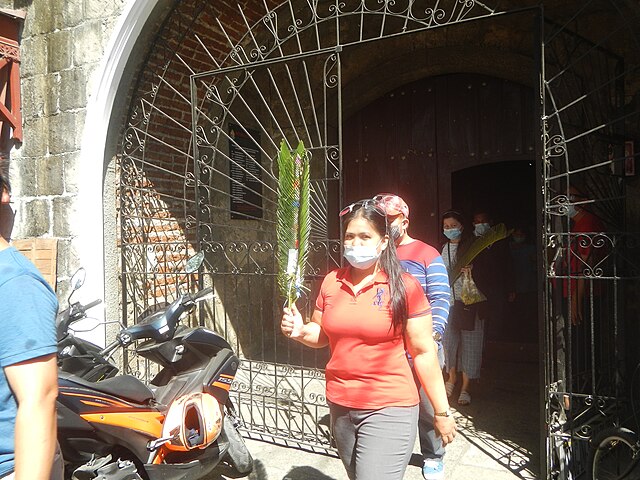
Monday and Tuesday
These days are similar in nature to other days of the year. There is a bit of a lull in activity and attendance between Palm Sunday and Good Friday.
Wednesday (or ‘Spy Wednesday)
Mass takes place. There will be a Gospel reading referring to the betrayal of Jesus. There may be a Taize service at night.
Holy Thursday
Holy Thursday commemorates the Last Supper. Thursday begins what is known as the Tiduum (the three days leading to the Resurrection). The Last Supper is regarded as the first Eucharist in history. Holy Thursday is also often known as ‘Maudy Thursday’. The word Maudy is thought to have derived from the Latin mandatum (to mandate or command). The priest washes the feet of twelve worshipers.
Good Friday
Good Friday is associated with the Crucifixion of Jesus. This is the only day of the year on which there is no Mass. Parts of the service include the liturgy, the Adoration of the Cross and the Holy Communion.
Priests enter in silence and kneel. This is a difference to services on other days of the year. The general tone is quiet, reflecting the sombre nature of the Crucifixion.
The Passion of the Gospel of John is part of the liturgy.
The alter is relatively bare compared to other days of the year. However, a cross is placed upon it and worshipers are invited to honor it, usually by kissing it.
There is no formal dismissal on Good Friday
Saturday – Easter Vigil
This is one of the most attended events of the year for the Catholic Church. In some parts of the world, this service is scheduled for around midnight. In other locations, it takes place just after sunset.
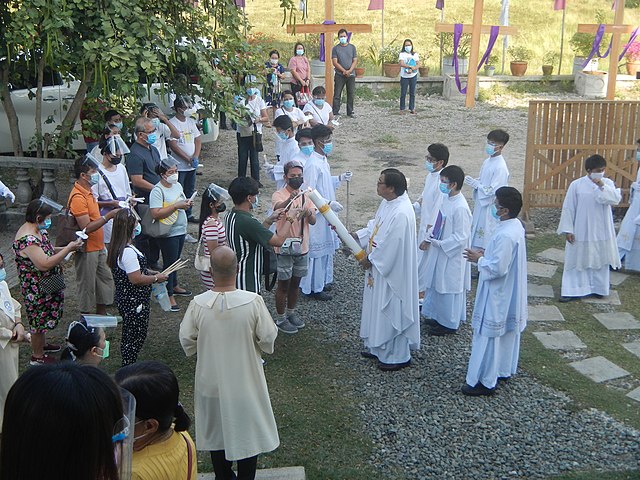
The Church will have a special Paschal candle lit in front of the church. Attendees use it to light their own candles which they can then take inside the church. The church is initially dark before returning to light towards the end of the service. This is representative of Christ’s resurrection and return to the world.
Sunday
The Sunday service is similar to services held throughout the year.
Determining the date
Easter is one of those floating holidays where the date can change year to year. Easter is linked to seasonal cycles and the lunar calendar.
The dating of Easter was one a host of issues that were dealt with by the Council of Nicea in 325.
In the Western Church, Easter falls on the first Sunday after the first full moon of the Spring equinox (of the northern hemisphere).
This ‘full moon’ is actually the 14th day of the lunar month.
As the equinox is, in reality, a movable date it has been fixed by convention as being 21 March. Easter can fall on a Sunday anytime between 22 March and 25 April.
Christians groups that do not celebrate Easter.
Not all Christian groups celebrate Easter. Puritans refused to celebrate it as it is not mentioned in the bible. Although the events which people commemorate do appear in the Bible, Easter itself does not.
Quakers tended to view all days as being equally significant and so rejected Easter’s elevation relative to other days of the year.
Some also view the holiday as having some pagan roots or overtones.
Glossary
Liturgical – relating to public worship
Taize – a prayerful form of music
Advent – the arrival of something anticipated
Eucharist – the Christian service commemorating the Last Supper. The ritualistic receiving and consuming of bread and wine (representing the body and blood of Christ)
 Australia and the World Past and Present
Leave a comment