In 2024, there was a spate of attacks on Captain Cook statues in Australia.
In St Kilda, Melbourne his statue was cut off at the ankles. The same thing happened to Cook’s likeness in the Fitzroy Gardens in another part of the city. Another statue of Cook was vandalised in Sydney’s Randwick.
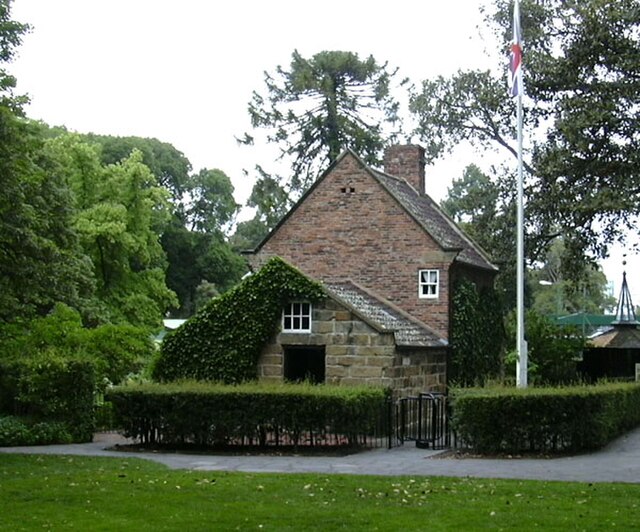
Why are statues to this man such a magnet for paint and angle grinders?
Cook had humble beginnings. He was the son of a farmer laborer and manager.
He served on trading ships in the North and Baltic Seas for many years. Afterwards, he joined the Royal Navy. He was serving in the Navy at the time of the Seven Years War with France.
France had made Quebec City, on the St Lawrence River, a base for their operations in North America. The British wanted to lay siege to the city but first they needed to capture the Fortress of Louisbourg that protected the entrance to the river.
Cook was involved in the capture of Louisbourg.
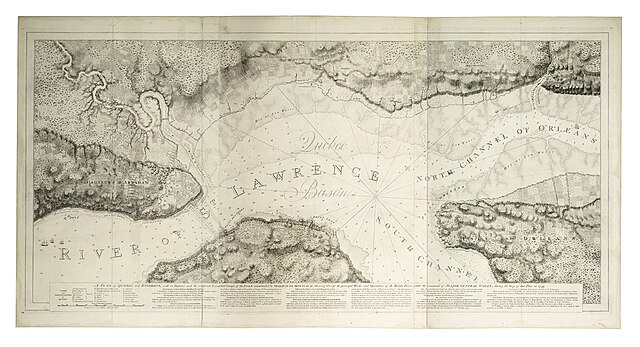
He was instrumental in taking soundings of the St Lawrence River. This allowed British forces to approach Quebec City for their siege in 1759. Cook’s military career in North America was spent mainly in navigating and mapping.
Cook rose swiftly in rank. He was intelligent.
He was good organiser of men. He could sail the world for years on end while maintaining a ship.
On his first voyage of discovery, there were 73 sailors and 12 marines. In the second, Cook’s Resolution had crew of 112. His companion ship had 81.
He never faced a mutiny. This was stark comparison to William Bligh, who was actually on board Cook’s third expedition.
Cook was responsible for maintaining enough water and food for his crew and he was responsible for discipline on the ship. He was only 40 when he was commanding his first voyage of discovery around the world.
Cook in Tahiti
Bartering between the crew and islanders was common. Iron nails seemed be highly valued by the Tahitians who didn’t have iron ore or a tradition of metallurgy. On one occasion, an islander took a musket and was shot by one of Cook’s crew.
Upon leaving Tahiti, Cook took on two Tahitian passengers – Tupaia and his aid. Botanist Joseph Banks was more keen on the idea than Cook was. Banks thought that Tupaia would be able to provide useful information about the location of other islands and help to communicate with the inhabitants of other places. Tupaia was from the priestly class in Tahiti and was a proud man. Tupaia was treated well while on the ship. He was a good cook, a skilled fisherman and as it turns out, a important translator for the ship. He would die from illness in Batavia.
Cook in New Zealand
Early interactions between the Maori and Cook’s crew didn’t go well. In the first encounter, Cook’s crew were in two smaller vessels. Maoris grabbed one, Muskets were fired into the air, a spear was raised and a Maori was shot and killed.
On the second day, Cook’s party met the Maoris on land, with the interpreter Tupaia. The moment of truth had arrived for Tupaia. It turned out that he was able to communicate with the Maori as there was a connection between the Maori and Tahitian languages.
Soon after, things took another bad turn. The general pattern went something like this: some item would be taken, the British would fire their weapons.
Cook sailed on to present-day Port Napier. Smoked fish was traded for cloth. Tupaia’s aid was taken by the Maori and later recovered. There were more Maori deaths.
Close to the Bay of Plenty, Cook stayed for over ten days. Seafish was traded for cloth. At some point, again an item was taken without reciprocation and one of Cook’s crew shot another Maori.
At the same time, de Surville was exploring for the French. When he arrived in New Zealand, he was interested in acquiring fresh water and firewood and fresh greens for his crew. Surville even had a Maori chief aboard his vessel. Surville’s crew wasn’t attacked. The French gave the Maori’s gifts including pigs. Nevertheless, even French relations seriously deteriorated soon after.
Cook in Australia
It is true that other Europeans had seen Australia before Cook. The Dutch had knowledge of the western and northern coasts of Australia. By and large, they considered what they saw as inhospitable and not worthy of much attention. They preferred to sail on to places like Batavia in present-day Indonesia.
One Dutchman who had reached the eastern side of Australia was Abel Tasman in 1642. Cook benefited from those discoveries. Tasman had visited the west coast of Tasmania and then the east side of the island, where some of his men had set foot on land. Tasman had crossed the Tasman sea from west to east and had visited the west coast of New Zealand. Some of Tasman’s crew were killed by Maoris and afterwards, had he decided to travel north towards the more well-known equatorial waters. Tasman had mapped only part of New Zealand’s west coast. On the way north, he also visited Tonga, some Fijian Islands and part of New Guinea.
By the time Cook sighted Australia, he was in need of fresh water again. Cook attempted to communicate this to the Aboriginals that he met. When this didn’t get anywhere, he instructed his crew to point the boats towards the shore and fired off a warning shot. The Aboriginal men threw stones at the boat. In response, musket shot was fired and an indigenous man was wounded. Spears were thrown at the British. Multiple crew fired shot and again some aboriginals received wounds.
Botany Bay
At Botany Bay the Aboriginals did not approach the Endeavour. They did not appear to be very interested in any objects that the Europeans had tried to offer them.
Further north
Cook’s ship was damaged when it hit the Great Barrier Reef. He had to run the ship aground for repairs. Relations with the Aboriginals here were initially relatively cordial. Some Aboriginals even dared to come aboard the ship. What troubled them most was when they saw the ten or so green turtles that the British had taken aboard. They wanted them returned and tried to push them back overboard. Relations would not recover.
What is clear is that instances of First Contact were frought with danger – for both sides.
Communication between both parties was not good. Neither side could speak the other’s language. They did not have a shared vocabulary. Tupaia had helped the Maori and British to communicate, but he could not help communicate with the Aboriginals. The connections between the languages just didn’t exist.
Even if both sides could communicate, there was still suspicion. Even if the British could communicate that they only wanted water and wood and would soon be on their way, would it have been prudent for the native people to take them at their word?
Both the Maoris and Aborigines had weapons. In both Maori and Aboriginal societies people maintained weapons, fought and sometimes killed each other.
In the case of Aboriginal society, warfare did take place. Clan or tribal groups were often relatively small and warfare among different groups could have a devastating impact.
One reason that casualties were higher on the indigeous side was a lack of knowledge about Europeans weapons and then when these dangers were understood, indigenous weapons simply could not match the range and impact of the European firerarms.
Cook did claim all of the land that he had visited in eastern Australia in the name of the king of Great Britain. This would have next to no meaning if the British had not colonised the east coast of Australia around a decade after Cook had died. It appears that Banks was a more keen on Australia as a good place for a colony than Cook was.
Cook displayed a lot of courage in his voyages. The mind tries to imagine spending the better part of twelve years sailing around the oceans of a world in a small wooden ship that Geoffrey Blainey describes a”little larger than a doubles tennis court”. Sailing in the ‘Roaring Forties’ must have been especially frightening.
Although Cook benefited from the discoveries of European sailors that had gone before him, he built on these and ventured to many places they had never been. Cook was frequently charting new courses.
Cook significantly built upon the existing knowledge of New Zealand and the east coast of Australia.
While many European sailors simply sailed along coastlines and viewed the land from the safety of the ship, Cook would make landfall where he could.
Cook saw more of the world than most of his contemporaries. He probably saw more of the world than most people alive today.
Cook was an explorer. He was not a settler. In his explorations of Australia, in most places he would stay no longer than a few days, perhaps a week. His longest stay in Australia was at Cooktown and only beacuse he needed to repair his ship.
Much of Cook’s exploration had a scientific aspect. Cook was curious about the world.
On his first voyage of discovery, he went to Tahiti so that his team could record the passage of Venus. In concert with teams in other parts around the globe, his recordings would help us to work out how far the Earth was from the Sun.
Was Cook mainly motivated by his duties to his financiers, a desire to etch his name in history or a strong sense of curiosity? Each may come to their own conclusions.
Cook was killed in Hawaii. He was killed by indigenous people. A people who had their own monarch no less.
On his first trip there, he was welcomed warmly. Relations became colder with each subsequent visit. Perhaps there was a growing sense that he had overstayed his welcome. Cook set sail again, but his mast was damaged and he was forced to return once again. One of his auxiliary ships seemed to have been stolen and it appears that Cook attempted to kidnap the chief in order to get the vessel back. Cook was killed on a beach in Hawaii.
If Cook hadn’t explored the east coast of Australia, is it likely that Australia would never have been colonised? The short answer to this is almost certainly no. By the late 1800s, many European powers had colonies in Asia or the Pacific
The main European contender for Australian colonisation would have been the French. In the late 1800s, France claimed New Caledonia and French Polynesia in Oceania not to mention Laos, Cambodia and Vietnam in southeast Asia.
The French were exploring New Zealand and the east coast of Australia at the same time as Cook.
It is just not plausible to suggest that no outside would power would have colonised Australia if the British had not.
Cook’s discoveries transformed geography, botany, nutrition and cartography. He was one of the greatest navigators in history. He had circumnavigated the globe twice and was going for a third time. The famous explorer Christopher Columbus had made his four voyages, but these were confined to the Atlantic Ocean. Cook travelled far more widely than Columbus. Cook was more explorer than coloniser.
 Australia and the World Past and Present
Leave a comment