A problem was brewing for Cape Town in the Western Cape region of South Africa.
Beginning in 2015, water levels in the dams that supplied the city were diminishing.
The situation was particularly bad in 2017 and 2018. At that time, dam levels were between a quarter and third of capacity.
The term ‘Day Zero’ started to be tossed around. If water levels fell below 13.5 percent, the city authorities would have turned off the water supply and people would start receiving rationed water.
The city authorities chose to implement water restrictions in an attempt to manage the situation.
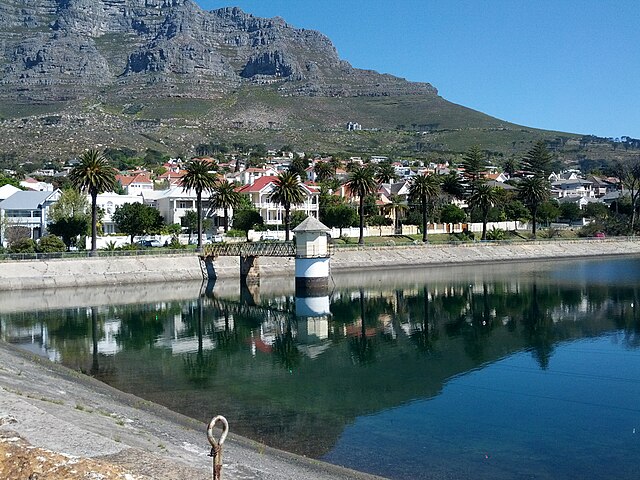
Cape Town relies on a system of six major dams. Water in these dams service not only Cape Town but also the surrounding agricultural area. Of the total water used, the city uses around two thirds while the surrounding farmland utilises about a third.
Around one fifth of the city is made up of informal settlements. Community taps are common in the settlements.
What had caused this emergency?
Different people empahsise different factors or combinations of factors.
The region experienced multiple years with relatively low rainfall.
Drought was effecting Cape Town by 2015. There was a large drop in dam water from 2014 levels. The dams servicing the city rely on rainfall. 2017 actually had the lowest rainfall on record.
The population of the city had grown rapidly. In the mid-nineties there were around two and half million people living there. However, by 2015 the city had added more than a million residents.
Dam storage had actually increased during the same period, but it hadn’t increased at anywhere near the rate of population growth.
Some suggested that debt and corruption were also factors in an underinvestment in infrastructure.
Responses to the crisis
By the middle of 2017, city authorities had put in place use limits off 100 litres per person each day. In October of that year it was predicted that the city only had five months of water supply left.
Under ‘Day Zero’ conditions, collection points would have rationed out 25 litres for each person per day.
The farmland around Cape Town produces a lot of wine and fruit.
Between 2017 and the following year, farms had to cut their water use by 60%. This had an effect on production and a flow-on effect for employment.
Some hotels filled their pools with salt water instead of fresh water.
The authorities ruled out building a permanent desalination plant based largely on the expense. It was estimated that a single plant could cost up to a third of the city’s budget.
Water use got down to 50 litres per person each day. The people of Cape Town essentially got by on half of what they were accustomed to.
Because residents were using less water, the city was receiving less revenue. Therefore, it proposed an increase in tariffs. Global Water Intelligence compiles an annual list on tariff increases for water. In 2018 Cape Town topped the list with a 390% increase.
More rainwater collection tanks were installed. Some people drilled boreholes in order to reach their own source of water.
Crisis averted – for now
In the years after 2018, the water levels in Cape Town’s dams increased. In 2021, they rose to 69.8% of total storage. In 2024, the figure stands at 59.2%.
Day Zero had been averted, for now. Rainfall in this part of the world is unpredictable. Drought, aging infrastructure, limited public funding and a growing population are all combining to create a potential perfect storm for Cape Town. The city will need to have a clear plan to address these challenges and get to work implementing them.
 Australia and the World Past and Present
Leave a comment