The question is hypothetical but intriguing.
If we take the American Civil War out of the equation what is left standing as Lincoln’s achievements?
In 1831 / 2 he ran a general store in New Salem, Illinois.
In 1832 he declared as a candidate for the Illinois House of Representatives. He would end up losing this election, but in the meantime he decided to volunteer for the Illinois Militia.
He was elected Captain in the Black Hawk War of 1832. This was despite having no military experience whatsoever. In 1832 the native-American Black Hawk had entered into Illinois in order to retake land with around a thousand followers. Roughly half were warriors while around half were women and children. Lincoln was a volunteer.
Lincoln did not see battle but he did see the effects of war. He saw many bodies – some scalped – and he was involved in burying fallen soldiers. Lincoln’s involvement with the militia lasted only 3 months. He received land grants in return for his service. His service also expanded his network of contacts which he could later draw upon in his career.

He was made postmaster of New Salem and began studying law.
Lincoln served in the Illinois State Legislature between 1834 and 1842.
In 1836 he was admitted to the bar in Illinois. He had studied law by himself. He moved to Springfield in that year and began law practice.
He had been involved in the decision to move the state capital to Springfield in 1839.
While in the Illinois State Legislature he was a keen supporter of expanding the railway network.
Illinois was an overwhelmingly rural state and was largely underdeveloped in terms of transportation infrastructure.
Abe supported more highways and more canals.
He advocated for constructing the Illinois Canal and the Michigan Canal.
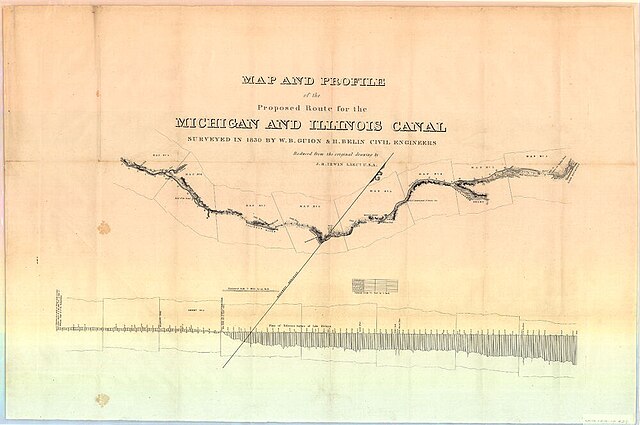
Lincoln was in favor of dredging waterways.
These were expensive projects and they led to a large state debt.
There was the ‘Panic of 1837’ and a recession followed.
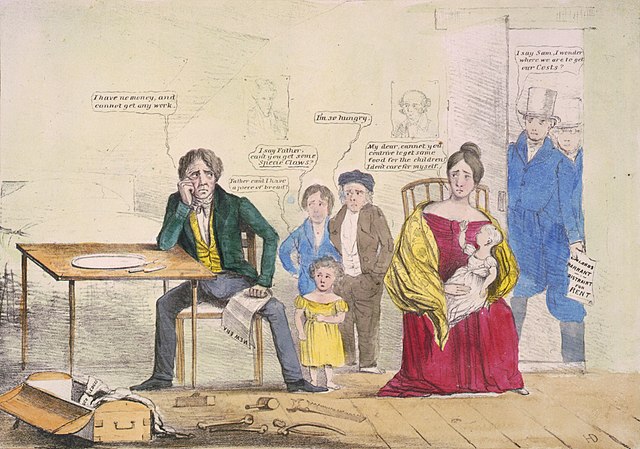
He worked to expand suffrage from white landowners to all white men.
Lincoln only had one term in Congress – 1847-49.
He was opposed to President Polk’s entry into the Mexican War (1846-48). Abe believed that the Mexico War was unnecessary and unconstitutional. He believed that Polk had violated the Constitution by invading Mexico in order to add territory rather than to drive back an invasion. He was suspicious that the war was a ploy to extend slavery. Lincoln’s opposition to the Mexican War was not popular amongst his constituents and it cost him politically.
Lincoln supported Zachary Taylor in the 1848 Presidential election – an election that Taylor won.
After his term in Congress had ended, Lincoln settled down to life as ‘prairie lawyer’.
He argued before the Illinois Supreme Court on many occasions and won his fair share of cases.
Lincoln’s early military experience was minute. Although proud of being made Captain, many of his men did not rate his military capability. Abe himself was self-deprecating of his time with the Militia.
He took opportunities for advancement wherever he could find them.
He put himself forward time and again for higher office.
His legal self-learning was impressive.
He gained no small measure of respectability in the state on Illinois – even appearing before its highest legal court to argue the finer points of law.
But his fame was mainly restricted to Illinois.
His time in Congress was fleeting – hardly noteworthy.
How many others had spent more time in the Capitol? Abe had spent a mere two years.
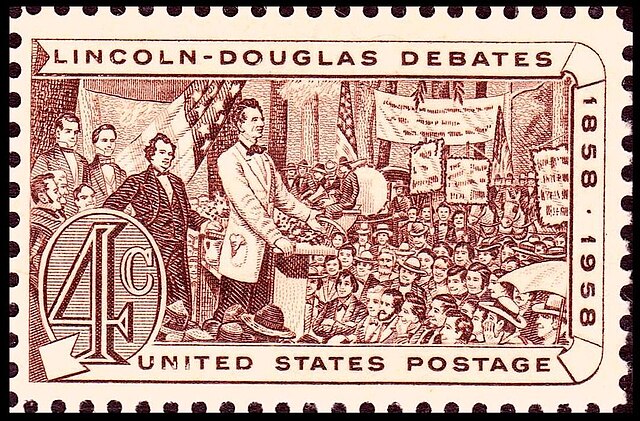
Slavery was the issue that made President Lincoln. He rose to prominence through his Lincoln-Douglas debates in 1858.
Great men need a great evil to fight against.
The fight against slavery elevated Lincoln as a national figure.
Without it, it appears that he was destined to live out his life in Illinois, a self-made and respectable professional who managed to marry the law and politics successfully in his home state.
One last thing to consider is this – if Lincoln had still managed to become President on the back of the slavery issue but there had been no civil war – that the southern states had seceded but Lincoln hadn’t decided to fight to preserve the Union.
While there might have not been the bloodshed seen during the Civil War, I believe that his place in history would have been much reduced.
I believe he would have been seen as more of a lame duck President – unwilling or unable to keep the nation together and responsible for losing half of the country. Vacillating and incompetent.
 Australia and the World Past and Present
Leave a comment