Christianity never really took hold in Japan – at least not on a large scale.
Only around 1% of Japanese consider themselves Christian.
In 1549 the Portuguese missionary Francis Xavier arrived in Japan.
The early Christians in Japan were Catholic – mainly Franciscans and Dominicans.
Both the Franciscans and the Dominicans were founded in the early part of the 13th century. The aim of priests in these orders was not to live a cloistered life. They were to go out and engage the people. To preach and convert. Both orders were Roman-Catholic. Both advocated a simple life. Some have described the Franciscan order as ‘God as Love’ and the Dominicans as ‘God as Truth’. Both Saint Francis and Saint Dominic lived simple lives and stressed poverty, but it was probably stressed most stongly by the Franciscans.
The Dominicans are known for their focus on study and academic rigour. Some associate the Dominicans with their involvement in the Inquisition. The two orders probably have more in common than the things that separate them. One has a more academic flavour while the other strongly emphasises charity.
When Westerners first arrived in Japan the Japanese authorities wanted to keep them well away from the centers of power – and particularly the Emperor.
Therefore their activities were shunted to the southern region of Kyushu.
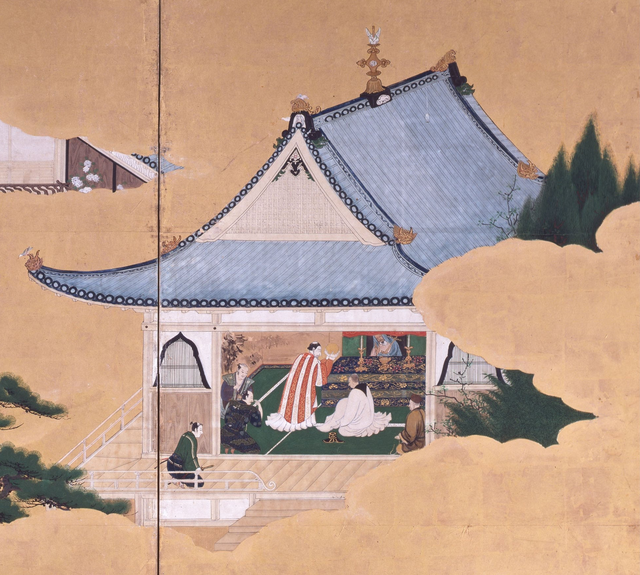
Some local rulers converted to Christianity. Politically speaking, Japan at this time was very fractured. The land was divided into many domains – each with its own lord.
Lords sought to maintain and expand their power.
It is likely that many of the lords who converted believed that their contact with the Christians would lead to greater power. Many were interested in acquiring the latest European firearm technology.
The first great unifier of Japan – Oda Nobunaga – was generally on good terms with the recent Christian arrivals.
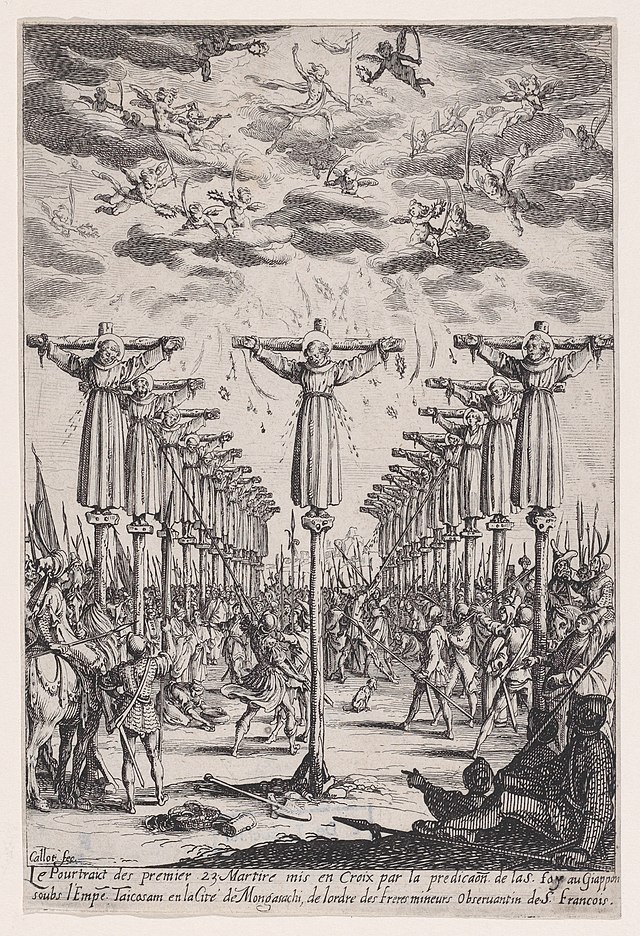
His successor, Toyotomi Hideyoshi was well disposed towards the missionaries at first but later turned against them. Under Hideyoshi believers and missionaries were crucified.
Hideyoshi had had humble beginnings. He was of peasant stock but became a foot soldier and began his ascent to the top. Hideyoshi was solidifying the unification of Japan that had started under Nobunaga.
There a national land survey and coin reform. Social stratification was becoming more inflexible. The social division between Samurai and peasants was strongly reinforced. Attempts were made to disarm the peasantry with ‘sword hunts’. This would make it harder for local warlords to resist centralised control.
In 1587 missionaries were told to leave Japan.
In 1597 there were executions of Christians close to Nagasaki. They would later be known as the 26 Martyrs of Japan.
The third unifier of Japan – Tokugawa Ieyasu – became shugun in 1603. He would continue the persecution of Christians inside of Japan.
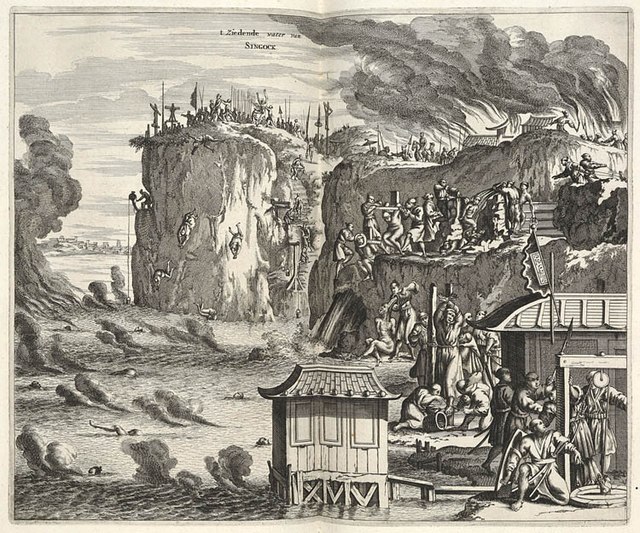
In 1612 he banned Christianity but this wasn’t strictly enforced.
In 1614 an edict was passed that required foreign priests to leave. Churches were to be torn down and converts were forced to renounce their religion.
In 1633 the Shogunate handed down an edict showing clearly that Japan was to enter a period of seclusion and was to be cut off from the rest of the of the world.
In 1637 yet another edict was issued banning Japanese from traveling to other countries.
In 1638 around 37,000 Christians were killed during the Shimabara Rebellion.
Persecution led to the religion going underground. Believers became known as the kakure kirishitan or ‘hidden Christians’.
During this period, sometimes Christian icons were hidden inside Buddhist alters.
In 1853 Commodore Mathew Perry arrived with his ‘Black Ships’ marking the opening of Japan to renewed foreign trade.
A few years later Protestant missionaries from America would land in Japan and began proselytising. For centuries European Christians had been active in Japan. Now America was gaining some measure of influence both commericially and also in the area of religion.
By 1865 the ‘hidden Christians’ had reemerged with their faith into the public sphere. There was a growing understanding by Westerners that despite the odds, this religious community had survived.
Japan continued opening to the West. The Meiji Restoration of 1868 was a period of intense learning from the West and industialisation surged. The ban on Christianity ended in 1873.
During the Restoration freedom of religion became much more widespread.
While much of Christian faith and practice has not been adopted widely in Japan one aspect has – Christian-style weddings are very popular.
Japan hasn’t been fertile ground for Christianity. Maybe there was already too much religion in Japan. Shinto and Buddhism has already been adopted. In Japan Christianity has at times witnessed brutal repression but also long periods of tolerance. Christian tenents are not widely understood -certainly not to the extent of Buddhist beliefs. There is high regard for Christian schools but more so because they are seen as fine academic institutions rather than for any religious views that they espouse. Many indiviual priests have devoted their lives to strengthening Chistianity in Japan. Centuries of experience shows us that the religion has never had the country-wide boom in conversions that the early missionaries had prayed for.
 Australia and the World Past and Present
Leave a comment