Farmers are not alone in Japan. Each individual farmer is a cog in the vast machinery of the agricultural cooperatives. These cooperatives are known as Nōgyō Kyōdō Kumiai (農業協同組合), Nōkyō (農協) or simply ‘JA’.
There are 694 regional cooperatives across Japan.
These cooperatives supply their members with everything they could ever need for their business.
They can help with fertilizer, finance, insurance, machinery, the marketing of products, packaging, transportation, real estate services and even funeral services.
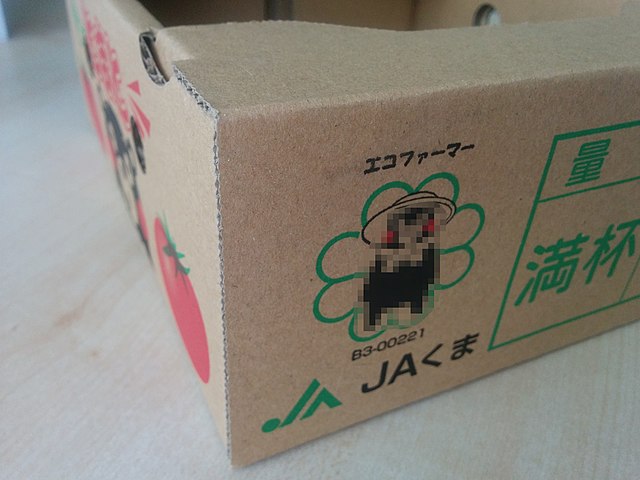
The cooperatives were founded by the government. The impetus for their creation was the shortage of rice in the aftermath of World War II and the associated price crisis.
Nōkyō are pervasive. The nōkyō system is essentially a vertically-integrated one. It covers all economic activities within the agriculture sector. It deals with inputs as well as outputs. It forms an integrated web of relationships. As a result, it hard to see how new providers can enter the system. Despite this concentration of power JA has an anti-trust exception in law.
JA even has departments to deal with the government (全 中 – zenchuu ) and a political committee (農政連 – nyouseiren) to deal with political matters.
In recent years a decrease in membership has forced the cooperatives to imagine how they might sustain their numbers. One idea has been to allow ‘associate members’ to join. Associate members are not farmers but by signing up as members, they can access JA finance and insurance.
For a long time the farming cooperatives have been a powerful lobby group and have been instrumental in returning Liberal-Democratic Party (LDP) members of parliament from rural areas.
One of the keys to understanding agricultural policies and practices in Japan is to understand the relationships between JA, the LDP and the Ministry of Agriculture, Forestry and Fisheries. Some describe this set of relationships as the ‘Iron Triangle’. The Ministry regulates, the LDP delivers farmer-friendly policies and funding to farmers and the cooperatives let the ministry know about the kinds of challenges farmers face. It is a circular system.
Political campaigning is limited in various ways in Japan.
Door to door campaigning is against the law. Personal relationships in Japan can be incredibly strong and direct appeals from a person one knows can be overwhelming. So the ban on door to door canvassing acts as a kind of buffer against this pressure.
In rural areas personal relationships are incredibly strong.
Candidates who support the objectives of the agricultural cooperatives have historically seen a high degree of support.
If we look at the latest general election results (2024) we see that the LDP has continued its success in rural areas however it does appear that winning votes in the countryside is becoming more competitive. Presently, he main competition comes from the Constitutional-Democratic Party (CDP).
The CDP picked up many seats in western Honshu.
The influence of the LDP can still be seen in places like Shikoku and the the southern parts of Kyushuu (Kagoshima and Miyazaki provinces).
Here are some interesting statistics from important agricultural areas in Japan:
In Hokkaido the LDP won 26.8% while the CDP won 29%.
In Kyushu the LDP won 28.6% while the CDP got 20.3%.
In Shikoku the LDP gained 31% while the CDP received 18.1%.
In Japan the agricultural cooperatives have had a huge influence over farming life since the end of WWII. The cooperatives are not just economic actors but have been influential political actors. They have played a large role in ensuring that the livelihood of farmers was prioritised over the prices that Japanese consumers payed at the supermarket – something almost never seen in other countries.
 Australia and the World Past and Present
Leave a comment