Between 1961 and 1963 the Congo was torn apart by the Katangan secession.
When the Congo gained independence, regional strong man (Moishe Tshombe) decided top go his own way and declared Katanga independent.
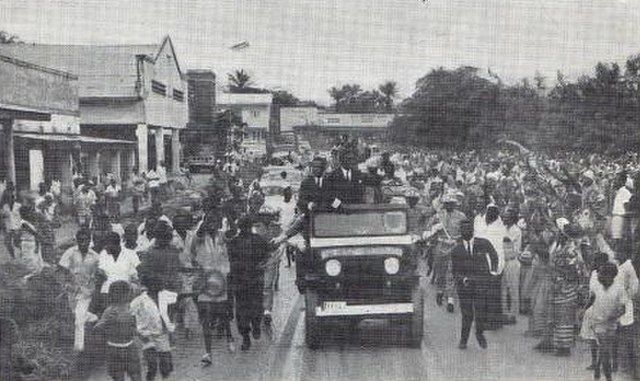
When Congolese Prime Minister Lumumba and President Kasavubu heard about the Katangan secession, they boarded a plane and headed for Elizabethville (now Lubumbashi) – capital of the breakaway province. When they attempted to land, they were refused permission – by a Belgium officer no less.
As David Van Reybrouck has written “the numbers one and two of the democratically elected government were being denied access to their country’s second largest city! By a foreign officer who had entered the city only a day before!’.1
Belgium didn’t go as far as formally recognising an independent Katanga, but in reality it provided a lot of support to the fledgling nation.
Belgian troops helped to establish a new Katangan army.
Many Belgian officers staffed the military police.
Tshombe’s administration was propped up with the help of mercenaries.
Mining company, Union Minière, financed much of the secession by diverting its taxes from the national capital, Léopoldville, to the provincial authorities.
Minerals were now shipped through Angola rather than through Matadi.
Lumumba and Kasavubu petitioned the UN for military assistance, which led to the adoption of Security Council Resolution 143. The resolution called on Belgium troops to leave the Congo. However, Lumumba was not satisfied as the resolution made no mention of Katanga.

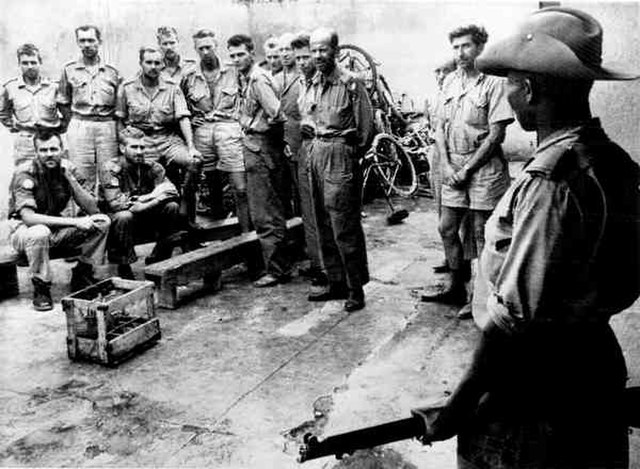
About this time, Lumumba was turning to the Soviets for support.
Van Reybrouck suggests that Lumumba was never enamored by communism. As an évolué, he was at the top of his nation’s social hierarchy and was probably not very keen to see his own class abolished.
Lumumba had sough assistance from the US, but hadn’t found a warm reception.
Lumumba traveled to the US but couldn’t secure a meeting with President Eisenhower. The excuse given was that an appointment hadn’t been organised ahead of time.
The Belgian government was reluctant to leave the Congo completely, arguing that the safety of its own citizens could not be guaranteed in the post-independence situation.
Political problems continued to plague the new Congolese state. In September 1960, Kasavubu removed Lumumba as Prime Minister. Soon after, Lumumba announced that that he was removing Kasavubu as President!
Colonel Mobutu stepped in to deal with the impasse between Lumumba and Kasuvubu. Lumumba was placed under house arrest while Kasavubu was kept on as a kind of figurehead.
Lumumba was under house arrest for weeks. Mobutu had sent troops to arrest him, but UN soldiers prevented it. The Congolese Prime Minister’s phone line was even cut. Lumumba escaped from his compound after some weeks and hightailed it eastwards towards his home base of support.
However in an act that would change Congolese history, he was intercepted on the way and taken to Katanga.
Some Belgians were present at Lumumba’s execution. The police commissoner of the Katangan police force and the captain of the national guard were both there.
Van Reybrouck writes that the decision to kill Lumumba was taken in Katanga.
Lumumba had been leader of his country for less than 3 months.
No country had ever recognised Katanga as an independent state, including Belgium and the US.
In the end, Katanga was forcibly reintegrated with the rest of the Congo. The UN had tried to force the country back together but in the end it would be Mobutu (with help from western powers) that ended the Katangan secession.
- David Van Reybrouck, Congo: The Epic History of a People, 4th Estate GB, 2015, p. 294 ↩︎
 Australia and the World Past and Present
Leave a comment