Robert Hamilton Mathews did much to preserve the words of Australia’s indigenous languages.
He made his living as a surveyor, but his greatest legacy was probably his recording of many of Australia’s indigenous languages and cultures.
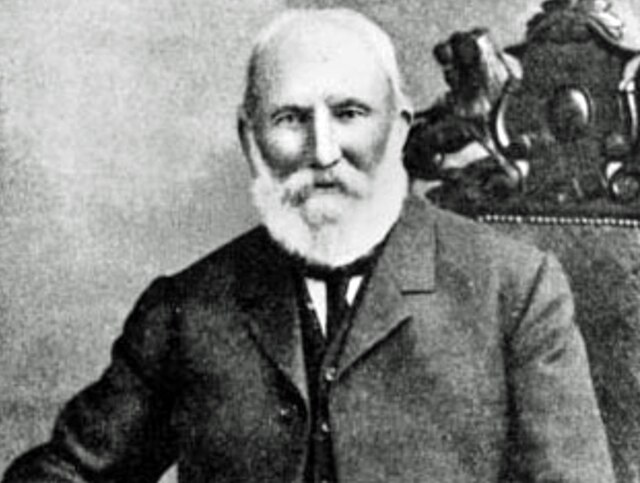
For Mathews, his studies were a labour of love. He created resources that people find valuable today. They can shine light on many of our past cultures and languages.
He collected information at a time when colonisation was expanding across the continent and indigenous peoples were coming under severe strain.
He was a particularly active across New South Wales, southern Queensland and Victoria.
He had no academic qualifications in the field of anthropology or linguistics. But he was keen as mustard.
He came to his studies of aboriginal culture late in life.
He had been successful as a surveyor and had became prosperous.
Mathews was born in New South Wales.
His family had come to Australia from Ireland via assisted passage. They disembarked in Sydney in 1840 to start a new life. The family settled near Goulbourn, between Sydney and Canberra
In the late 1960s Mathews trained as a surveyor.
By the 1870s he was traveling throughout the state. He also became familiar with northern parts of the state such as Goondiwindi and Singleton.
His records are especially important for large areas of northern NSW, where there were often few other sources.
In 1889 he moved to Parramatta.
A few years later, in 1892, he was sent to survey property near Milbrodale. He documented local rock art and prepared a paper for the Royal Society of NSW, which was published the following year.
His interest in indigenous rock art would be abiding.
But it wasn’t his only research interest. He was interested in kinship, marriage rites, initiation rites and languages.
He chose specialist journals for presenting his work.
He attempted top collect data himself.
His work covered most of Australia, but not Tasmania. For regions that he couldn’t get to himself, he asked others to collect information for him according to the methods that he had drawn up.
Mathews documented parts of 53 languages or dialects. This is especially important for comparative linguistics – understanding which languages are related to one another and to what extent. This may have implications for understanding how Aboriginal people settled the continent in waves of migration.
Mathews would usually describe a language’s grammar first and then detail vocabulary. While one can find early word lists of indigenous languages, grammars are rarer.
Still, there were only a few hundred words for most of the languages recorded – perhaps 300 on average. On the one hand, this is obviously just a fraction of a language. Still, the recording of even a small number of words is valuable. Many other languages don’t even have this. The preservation of these words allows a connection to culture. Moreover, even small collections of vocabulary can give us insight in to how neighbouring nations were related and to what extent they may have communicated or traded with one another.
Mathews has created an important legacy. He had an interest in aboriginal languages at a time of general disinterest. He created records that would transcend dis death. By putting indigenous words into written form he rendered them more permanent. It ensured that these words with linger on and could later be retrieved by academics, the general public and aboriginal people themselves who have an interest in rediscovering lost parts of their culture.
 Australia and the World Past and Present
Leave a comment