Margaret Thatcher has long been a controversial figure.
Like all prominent national leaders, she has her admirers and her haters.
This was the case not only in the UK but also on the other side of the world, in Argentina.
That mostly grew out of her role in the Falkland Islands / Malvinas conflict.
During the war and for decades afterwards, Thatcher was a despised figure in Argentina.
However, the story is more complicated than it may seem at first glance.
The conflict took place while Argentina was in a period of its history known as the “Dirty War”. The country at the time was governed by a military dictatorship.
Some have argued that confrontation with the UK over the islands was an attempt to stoke nationalist sentiment and to deflect criticisms away from the regime.
One particular event from the war with the UK is remembered – the sinking of the General Belgrano and the 323 Argentinian lives lost.
Many Argentinians regard it as a particularly egregious attack as it took place outside of the British total exclusion zone. The UK had initially declared a 200 nautical mile Maritime Exclusion Zone. Then, a “total exclusion zone” was declared. This latter designation was new. The Law of the Sea Convention made no reference to such a category. Some have suggested that the sinking of the General Belgrano was a war crime, an assertion that Thatcher denied.
Public sentiment of The Falklands / Malvinas conflict simmered down for years but it regained steam – especially during the presidency of Cristina Fernández de Kirchner (2007-2015).
Cristina was never destined to have a high opinion of Thatcher. They were from opposite sides of the political divide. Thatcher was conservative while Kirchner is Peronist. Thatcher pursued economic belt tightening while Kirchner pumped up state subsidies. Anti-colonialism is also one of the central planks of Peronist ideology and so it was clear that Kirchner would have never supported British intervention in the south Atlantic.
By 2009 Kirchner was facing pressing issues. In that year she faced a setback in midterm elections and lost her majority in Congress. Her approval rating dropped by almost 20%.
By 2012 she was staring down inflation problems.
In the same year, Argentina was raising the Malvinas issue at the United Nations.
Was she now doing what the military dictatorship had done – using the Malvinas as a diversion for domestic problems?
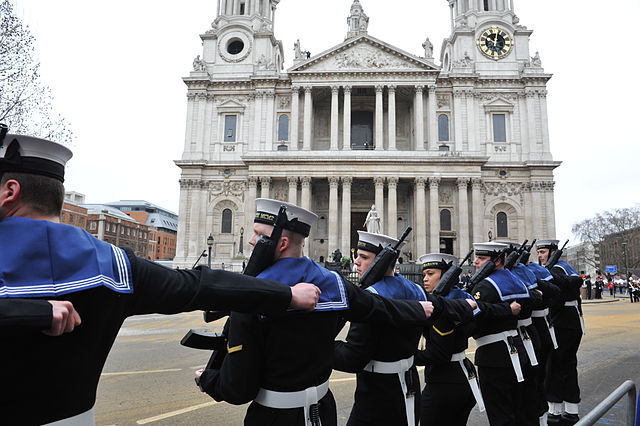
Thatcher passed away in 2013.
Following talks with Thatcher’s family, it was decided that Kirchner would not be welcome at the funeral.
however, an invitation was extended to Argentina’s ambassador in the UK. This was in line with procedure. If the UK had diplomatic relations with a country, it was standard procedure to send an invitation to attend.
It was a diplomatic snub for Kirchner, but she didn’t seem keen on attending anyway.
In recent times, Thatcher’s memory within Argentina has gone in a different direction.
The country’s current President is not fan of Kirchner or of Argentina’s other Peronist leaders. He lays he the blame for decades of economic failure at their feet. He and his ministers are more likely to look to Thatcher as a model for leadership and economic reform than to Kirchner.
Argentina’s deregulation minister, Frederico Sturzenegger, labelled Thatcher “inspirational” and suggested that her reforms in the UK had led to a “tremendously positive transformation”.
And now you have an interesting situation in which the current leader of the Tories, Kemi Badenoch, proclaims that President Milei provides a “template” for the UK.
Thatcher has been gone for over a decade, but memory of her legacy lives on. It is subject to twists and turns. Who would have thought in the mid-1980s that leading members of Argentina’s government would be extolling the virtues of the Iron Lady and that the leader of the Conservatives in the UK would be singing the praises of the President of Argentina?
 Australia and the World Past and Present
Leave a comment