Flags are symbols.
They can draw inspiration from past experience or they can look towards the future.
Flags make use of colour and Mozambique’s flag in no exception. There is an array of colours – red, green, black, yellow and white.
What often stands out however is the inclusion of a gun in the design – an AK-47 no less.

The firearm is not the only symbol on the flag.
One can also find a yellow star, a hoe and a book.
The book and the hoe are relatively benign symbols. The former represents education while the later represents agriculture.
The current flag was designed by the dominant political party of the post-independence era – FRELIMO.
It was no accident that the national flag bears a striking similarity to the FRELIMO’s own flag. FRELIMO’s flag also featured the star and the hoe but had a hammer in place of the gun. FRELIMO wanted to assert its dominance in the post-colonial era. Not only in the parliament and executive branch but also in the realm of symbols and historical memory. FRELIMO wanted the party to become synonymous with the state itself.
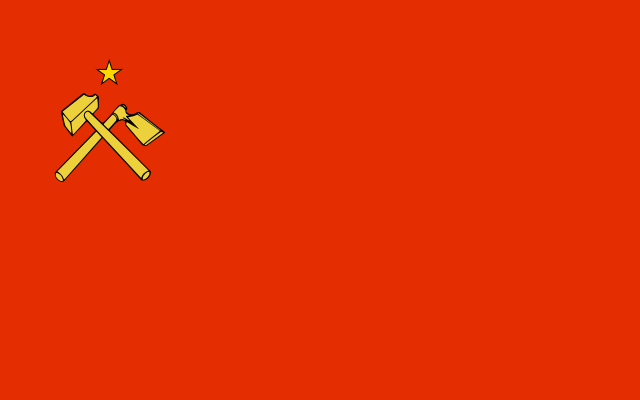
From time to time there have been calls to modify the flag.
Mozambique is not unique in displaying a weapon on its flag.
The Kenyan flag contains two spears and a shield and the flag of Saudi Arabia has a sword.
Angola’s flag features a machete and obviously draws inspiration from the hammer and sickle displayed on the flag of the Soviet Union.
Still, only a minority of counties feature a weapon on their flag.
An even smaller number display a firearm of some kind.
The flag of Haiti features 2 canons. Haiti became independent in 1804 and this accounts for the nature of the firearm found on the flag.
The flag of Guatemala has 2 rifles. The country also achieved its independence relatively early – in 1821 – and again, this accounts for the type of firearm depicted.
Mozambique gained its independence more than 100 years later – hence the AK-47.
It is possible to interpret the flag’s gun in various ways. To some it can be a symbol of violence and war and therefore have overwhelmingly negative connotations. To others, it can represent the defense of the nation. Interpreted like this, the symbol becomes less threatening and even protective.
The main opposition party of the last few decades – RENAMO – has been keen to see the flag changed. For RENAMO, FRELIMO is the old enemy. For RENAMO members the current flag is all about FRELIMO dominance. It has been argued that a truly national flag should not be dominated by one political party and should have a design that all in the country can rally around.
Some take particular issue with the gun arguing that it is not a symbol of peace, that it is a symbol of war and a bad example for young Mozambicans.
The star shown on the flag is also controversial. It has clear associations with Communism and the Soviet Union. FRELIMO was always partial to Communist ideology and the USSR. For FRELIMO, it represents an important part of Mozambique’s history. But for Mozambicans who do not share this ideology, the star comes across an overly political symbol – one tied to old and discredited forms of economic and social organisation that may look out of place in today’s modern world.
Some common themes run through the symbology of the former Portuguese colonies. The communist influence in the flags of Angola and Mozambique is clear to see. In both cases the hammer and the sickle has been modified. It interesting to note East Timor also uses an AK-47 on its coat of arms, although not on its flag.
It seems that the gun on the flag will remain contested into the future. Some years ago, new potential designs for the flag were put forward, but unsurprisingly they were rejected by the FRELIMO-dominated legislature. FRELIMO retained its dominance at the last election. The gun stays for now.
 Australia and the World Past and Present
Leave a comment