By 1910, forestry had undergone some changes in Victoria.
20 kinds of timber were considered to have commercial value.1 All of these were eucalyptus species.
A forest nursery had been created at Creswick which would churn out 4-5 million trees per annum.2
There were new plantations in Frankston, South Gippsland, near Warrnambool and in the Wimmera.
A Forests Act came into effect at the beginning of 1908.
The most common dairy holding was between 101 and 200 acres.
3,007 dairy farmers operated on their own, requiring no outside labour. Meanwhile, 2,205 did employ labour. It was reported that 3,194 individuals were being paid a salary or wages. The family unit was often also an economic unit. Family members helped out with dairy operations. 3,263 males and 4,456 females are listed as “relatives assisting”.3
The most important counties for onion production were Bourke, Buln Buln, Grenville, Mornington and Polwarth. In Buln Buln, 5,513 tons was produced from 708 acres.4
In 1898, manure was only put on 7% of cultivated land. However, soon after, imports rose at a very sharp rate and in 1910, 88,633 tons was imported into the state. Most of this was guano and rock phosphates from “Ocean Island”, which was the old name for Banaba, part of Kiribati.5
Technological innovation was always taking place. Steam engines were still in use. There were 380 in Gippsland. As would be expected, the majority of harvesters were located in Northern districts (4,176) and the Wimmera (2,475). This compares with a paltry 28 in Gippsland. Gippsland had 68 threshing machines, 124 winnowing machines and 1000 reapers and binders. Added to this were 7,731 ploughs, 5,633 harrows, 2,020 chaff cutters and 4,471 cream separators.6
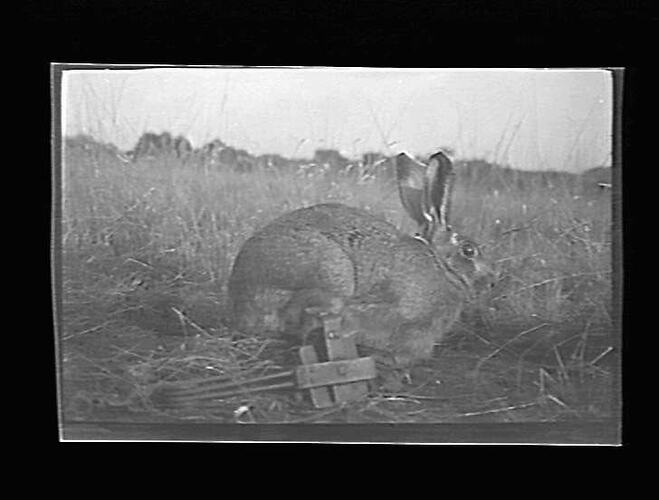
Around a quarter of million rabbits were being sold at the Melbourne Fish Market in 1910. More were being frozen and sent overseas – well over a million in 1910.7
In factories, the largest cost tended to be material inputs (59.9%). Next were wages (20.7%). Fuel costs were relatively small (1.7%), leaving an average profit margin of 17.7%.8
The most common kind of factory had 5-10 employees.
There were 13 places freezing or preserving meat. They were processing 1,573,516 sheep and 2,660,604 rabbits.9
 Australia and the World Past and Present
Leave a comment