This site contains articles on current affairs, Australian history, Austalian culture and selected issues from around the world
Paul and Virginia in art
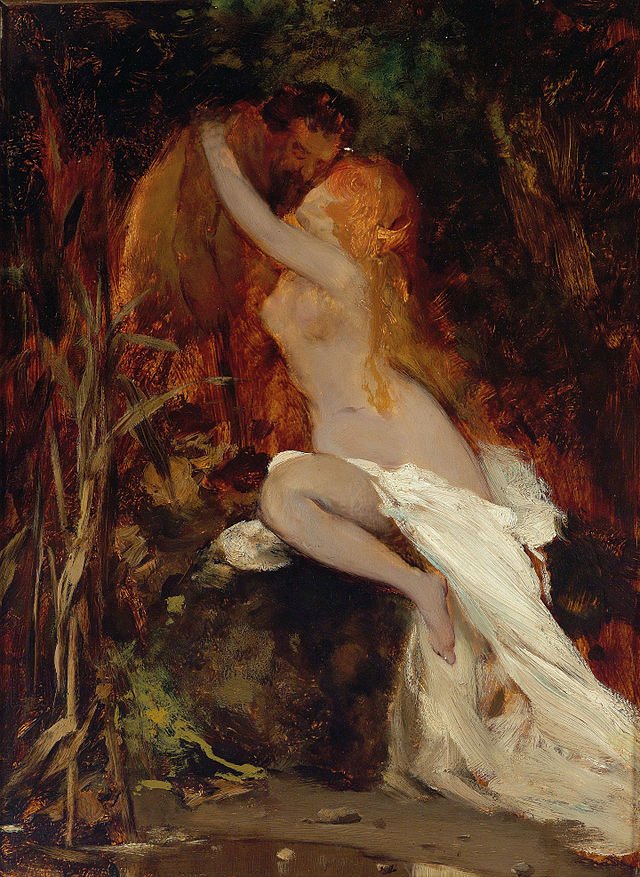
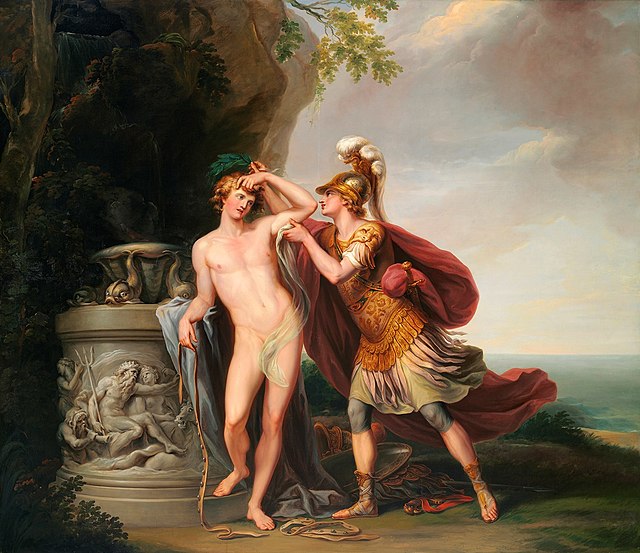
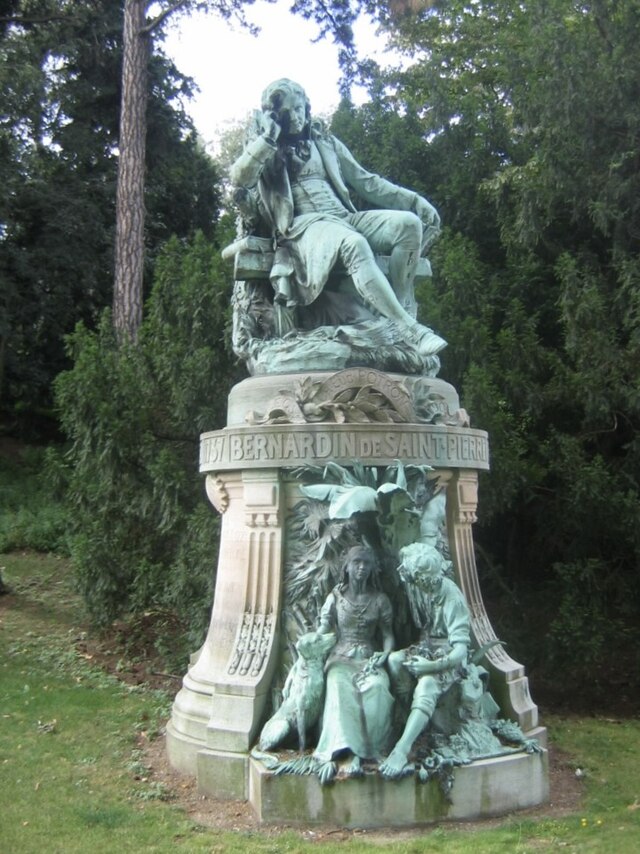
Saint-Pierre was writing during the Enlightenment period in Europe. He was influenced by Greek and Roman mythology, and ancient literary classics. We might call the artistic influences drifting around Europe in the late 1700s as “Enlightenment-humanism”. Key themes are love, virtue and, innocence. Saint-Pierre was writing a few centuries after the Renaissance. He was concerned with issues of social inequality and colonial exploitation. Here I present some of the artistic inspirations used in Paul and Virginia. One the book was published, artists used the imagery to create new works. Finally, there are some examples of public art (statues) inspired by the novel.
Line art drawing of a dryad by Pearson Scott Foreman. Dryads were creatures from Greek mythology. They were female tree nymphs. They represent trees, nature and beauty. They were calm and nurturing. They were often presented as being bound to specific trees.Faun and Nymph by Hans Makart (mid-1860s). Fauns come from Roman mythology, but were inspired by the Greek satyrs. They are half-human, half-goat. They are lively creatures – sometimes hedonistic. They roam about the forest freely. They represent fertility and vitality.Leda and the Swan, by Paul Beckert, circa 1912. Leda is a character from Greek mythology. She was queen of Sparta. One night, she slept with her husband but was also seduced by Zeus, who came to her in the form of a swan. Afterwards, the laid 2 eggs, which produced children. Some were divine, while others were mortal. The divine children were Helen of Troy and Pollux. The mortal ones were Clymemnestra and Castor. Pollus and Castor were also twins and were inseparable. When Castor died, Pollux begged Zeus to let them share immortality. Zeus agreed, and they became the constellation Gemini.Castor and Pollux by Giovanni Battista Cipriani, 1783Paul et Virginie (cropped). Color lithograph by Charles Vogt, after the painting Enfance de Paul et Virginie of Adèle Ferrand, exhibited at the Salon of Paris, 1846. The children are both the center of the painting and the center of attention. All are surrounded by nature. The two children are as close as can be and surrounded by maternal figures. The dog’s name in the novel is Fidèle, “faithful”.Paul and Virginia, anonymous oil on canvas, mid-19th century, copy of a painting by Henri-Frédéric Schopin held at the Musée historique de Villèle, Réunion. This painting recalls the children’s journey home from a slave plantation. The two found the return trip difficult, becoming fatigued and hungry. The slave Domingo can seen searching for them. While the two are often depicted at one with nature, in this scene, their feet become bloody. They are no longer at one with natureNaufrage de Virginie, “Shipwreck of Virginia”, an engraving by B. Roger after a drawing of Pierre Paul Prud’Hon, 1787. Depicts the tragic scene of Virginia’s return to the island from Europe. All other crew had abandoned ship. One sailor pleads with her to take of her clothes so that she does not drown. In modesty, she refused and was taken by the waves. She was so close to being reunited with Paul, but the two would never meet again.Paul et Virginie, scene 6, Charles-Malchoir Descourtis, late 18th Century. Paul prays at Virginia’s grave. After the death of Virginia, Paul entered into a deep depression. He walked about the island and was accompanied by Domingo and his friend (who acts the narrator in the book). His companions were concerned about his mental state and tried to look out for him. Nature is present. But so is the church. Both Paul and his companion are looking into the sky towards a European-style God.Bernadin Saint-Pierre, Jardin Plantes, by Louis Holweck, 1904. Here, the author and his creations are brought together. Perhaps Saint-Pierre dominates the structure, being at a higher level. Still, the two parts of this statues are of roughly equal proportionsStatue de Paul et Virginie, jardin de l’église Saint-François-d‘Assise de Pamplemousses. Photo by Benoît Prieur. In contrast to Henri-Frédéric Schopin’s work which shows an an almost collapsed Virginia at the feet of Paul, or Francois Pascal Simon Gerard’s work (1865) showing Paul carrying Virginia over a river, in this statue the two are shown side by side as friends and companions. There is a certain equality here.





 Australia and the World Past and Present
Leave a comment