Réunion Island, a French overseas department and region in the Indian Ocean, has numerous towns and villages whose names reflect its French colonial and Catholic heritage.
Among the most important are Saint-Denis, Saint-Paul, Saint-Pierre and Saint-Benoît.
All four names begin with the word Saint, reflecting the strong influence of Christianity and French culture on the island’s early development.
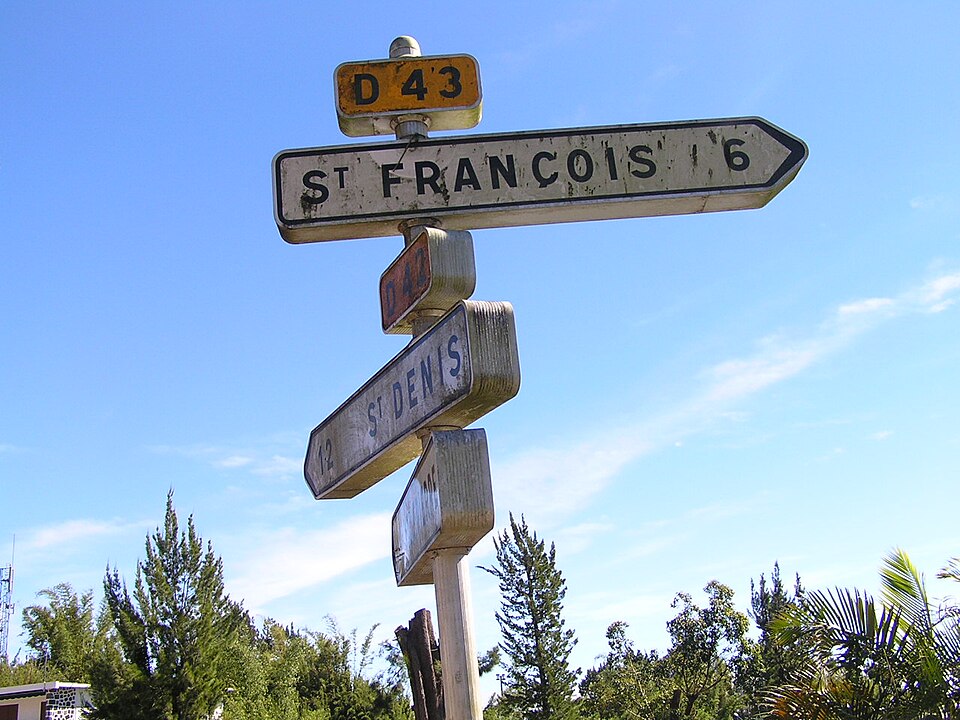
Saint-Denis
Saint-Denis, on the northern coast, is the capital and largest urban centre of Réunion. The settlement developed during the early period of French colonisation and became the island’s capital in 1738, replacing Saint-Paul.
Saint-Denis was a 3rd-century Christian martyr and is the patron saint of Paris and France. Saint Denis was beheaded for preaching Christianity and, according to legend, famously carried his head while continuing to preach.
The settlement is also associated with the ship Saint-Denis, which was involved in the early French exploration and settlement of the island.
Saint-Denis eventually became the administrative centre of the island. Government buildings, commercial activities and the island’s principal institutions became concentrated there.
Saint-Paul
Saint-Paul, on the western coast, has an especially important place in the history of Réunion. Its sheltered bay provided one of the island’s best natural anchorages, making it an important location for the earliest French settlers. It was also the island’s capital before the administrative centre was transferred to Saint-Denis in 1738.
The name refers to Saint Paul the Apostle, one of the most important figures in early Christianity.
Saint Paul is known for spreading Christianity beyond Jewish communities and for his epistles in the New Testament.
Like Saint-Denis, the name demonstrates the importance of Catholicism to French colonial society.
Saint-Pierre
Saint-Pierre, on the southern coast, is another of Réunion’s major urban centres. It developed into an important commercial and agricultural town, particularly as settlement expanded into the southern part of the island.
The name Saint-Pierre refers to Saint Peter, regarded in Catholic tradition as the first pope and a foundational figure of the Church.
The town’s development was also associated with Pierre-Benoît Dumas, who served as governor of Bourbon Island in the eighteenth century.
The name therefore has a dual significance. This illustrates how religious and personal commemorative naming could overlap in French colonial territories.
Saint-Benoît
Saint-Benoît (or Saint Benedict of Nursia in English), on the eastern coast, provides another example of Réunion’s extensive use of Christian names.
Saint Benedict (c. 480–547) is the founder of Western monasticism and the author of the Rule of Saint Benedict, which profoundly shaped medieval culture in Europe. He is also the patron saint of Europe.
Saint-Benoît developed on the wetter eastern side of the island. Its coastal position gave it a maritime dimension, although it never developed into a port on the scale of the major commercial port facilities elsewhere on Réunion. The surrounding region was highly suitable for agriculture because of its abundant rainfall and sugar cane became a particularly important crop.
The town’s history also illustrates how Réunion’s French colonial names sit alongside the island’s much more diverse population history. The development of agriculture brought together people of European, African, Malagasy and Indian origins. Consequently, although Saint-Benoît is unmistakably French and Christian as a place name, the society that developed around it was much more diverse.
What the four names tell us
The names Saint-Denis, Saint-Paul, Saint-Pierre and Saint-Benoît demonstrate how strongly French Catholic traditions influenced place naming on Réunion.
This pattern is not unique to these four towns. Réunion has numerous other settlements with names beginning with Saint or Sainte, including Saint-André, Saint-Joseph, Saint-Louis, Sainte-Marie, Sainte-Suzanne and Sainte-Rose. The frequency of these names reflects the religious culture of the French settlers who established permanent communities on the island from the seventeenth century onwards.


Leave a Reply