The East African Community (EAC) is one of Africa’s oldest regional integration projects.
Although the organisation in its present form dates from 2000, its origins go back to the colonial period, when Kenya, Uganda and Tanganyika developed a series of shared institutions and economic arrangements.
The foundations of East African integration were laid in the late nineteenth and early twentieth centuries. The construction of the Uganda Railway from Mombasa to Kisumu between 1897 and 1901 connected the interior with the Kenyan coast and encouraged economic links between Kenya and Uganda.
Customs arrangements followed, with a customs union between Kenya and Uganda established in 1917 and Tanganyika joining in 1927.
Other regional institutions included the East African Currency Board and postal services.
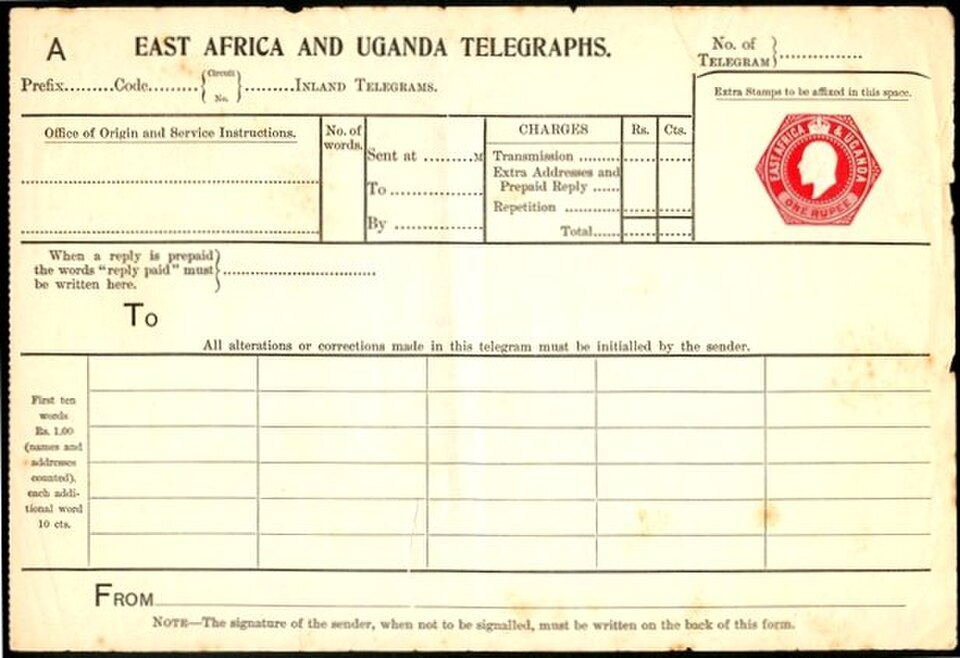
After the Second World War, cooperation became more formalised. From 1948 to 1961, the East African High Commission coordinated services such as customs, currency, transport, communications and education.
Following the independence of the territories, it was replaced in 1961 by the East African Common Services Organisation (EACSO).
There was considerable discussion during this period about whether Kenya, Uganda and Tanganyika might eventually form a political federation. However, differences in economic policy, political priorities and the unequal economic strength of Kenya made closer integration difficult.
In 1967, Kenya, Uganda and Tanzania formally established the first East African Community. The organisation was intended to promote economic cooperation and balanced development through a common market, common customs arrangements and shared institutions.
Its common services were extensive. East African Railways and Harbours, East African Airways and East African Posts and Telecommunications operated across national boundaries.
The University of East Africa operated through specialised colleges in the three countries.
The region also had a common currency arrangement based on the East African shilling.
Despite these achievements, the first EAC encountered serious difficulties. Kenya, Tanzania and Uganda followed increasingly different economic and political paths. Kenya generally pursued a capitalist economic model, while Tanzania under Julius Nyerere pursued ujamaa socialism. Uganda underwent considerable political upheaval following the 1971 coup that brought Idi Amin to power.
There were also disputes over the distribution of the benefits of regional integration with Kenya’s more developed economy contributing to perceptions of economic imbalance. These differences, together with disagreements over the management of common institutions, eventually became difficult to reconcile. The first EAC was dissolved in 1977.
After several years of negotiations, they signed the Treaty for the Establishment of the East African Community in 1999. The treaty entered into force in 2000, formally re-establishing the EAC.
The revived Community gradually expanded both its membership and its objectives.
Rwanda and Burundi were admitted in 2007.
The Common Market Protocol entered into force in 2010, providing for greater freedom of movement of goods, services and labor.
South Sudan joined in 2016, followed by the Democratic Republic of the Congo in 2022. Somalia acceded to the Treaty in December 2023 and became a full member in March 2024.
In this way, the EAC evolved from a relatively compact grouping centred on Kenya, Tanzania and Uganda into a much larger regional organisation extending across much of eastern and central Africa.
The EAC’s long-term ambition is considerably greater than simply reducing trade barriers. Its integration program envisages four broad stages – a customs union, a common market, a monetary union and ultimately a political federation.
The history of the EAC can be seen as a series of attempts to reconcile the economic advantages of regional cooperation with the political independence of its member states. Its first incarnation lasted only a decade but many of its institutions and ideas survived its collapse.
The re-established Community has built upon that earlier experience, expanding its membership and pursuing its goal of greater economic integration.


Leave a Reply