Kenya, Tanzania and Uganda have a long history of monetary cooperation.
Indeed, for much of the twentieth century the three countries used essentially the same currency.
The present national currencies – the Kenyan shilling, Tanzanian shilling and Ugandan shilling – were established in the 1960s.
The origins of a common East African currency go back to the colonial period. The East African Currency Board (EACB) was established in 1919. It issued currency for Kenya, Uganda and Tanganyika (later Tanzania).
The East African shilling became the common currency of the region. The EACB was responsible for maintaining the currency’s convertibility and managing its relationship with sterling.
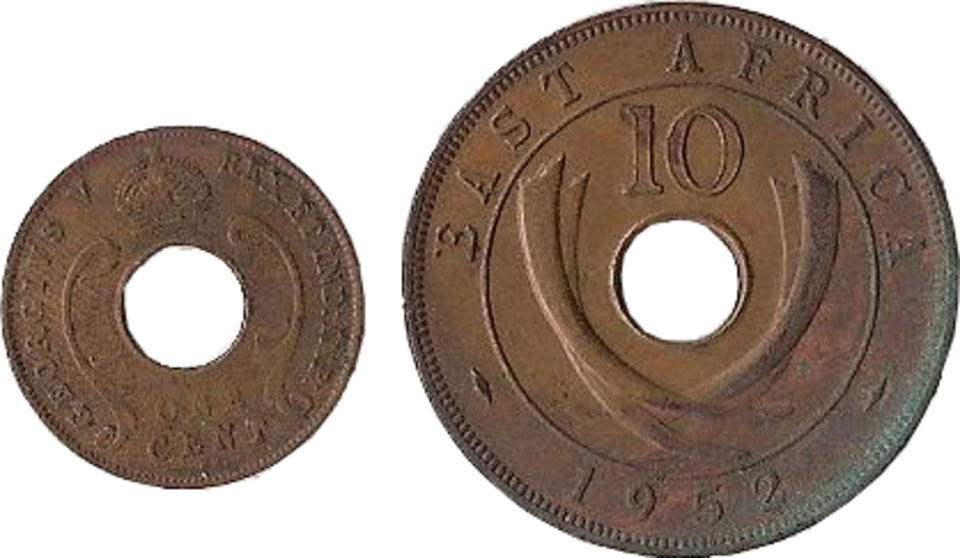
The common currency was particularly important because the economies of the three territories were becoming increasingly integrated.
The railway connecting the interior with Mombasa, common customs arrangements and shared government services encouraged trade across colonial boundaries.
The East African High Commission, established in 1948, subsequently coordinated a range of common services, including currency.
When Kenya, Uganda and Tanganyika became independent in the early 1960s, they initially retained the East African shilling. There was considerable interest in maintaining monetary integration after independence. The EACB even proposed the establishment of an East African Central Bank, which would have provided proper central-banking functions for the three newly independent states. However, this proposal did not succeed. The EACB was not designed to operate as a modern central bank, particularly because its ability to conduct monetary policy and provide credit was limited.
Instead, Kenya, Tanzania and Uganda established their own central banks.
The Central Bank of Kenya began operations in 1966 and Kenya introduced its own banknotes that year.
Tanzania and Uganda likewise introduced national currencies issued by their own central banks. The result was three separate but similarly named currencies – the Kenyan shilling, Tanzanian shilling and Ugandan shilling.
The currencies were initially closely linked, but their values subsequently diverged as the three governments pursued increasingly different economic policies.
The significance of this change became particularly apparent after the establishment of the first East African Community in 1967. Interestingly, the Community initially remained a monetary union. Kenya, Tanzania and Uganda had currencies at parity, with one Kenyan shilling equal to one Tanzanian shilling and one Ugandan shilling.
However, the three countries increasingly pursued different economic policies. Tanzania under Julius Nyerere adopted ujamaa socialism, while Kenya followed a substantially more market-oriented system. Uganda experienced severe political and economic disruption under Idi Amin. These differences made a common monetary system increasingly difficult to maintain.
The first EAC collapsed in 1977, and monetary cooperation subsequently became much weaker. Exchange rates increasingly reflected different national economic approaches.
When Kenya, Tanzania and Uganda revived the EAC at the end of the 1990s, monetary integration was once again incorporated into the long-term program.
The most important recent attempt to restore a common currency came with the East African Monetary Union Protocol, signed in 2013. The Protocol established the framework for progressively converging the currencies of member states and ultimately reintroducing a single currency for East Africa. The EAC envisages the creation of an East African Central Bank and the harmonisation of monetary policies.
The plan was initially intended to establish a monetary union within ten years. However, the timetable has not been achieved. Creating a common currency requires participating countries to meet demanding economic convergence conditions. These include limits on inflation, fiscal deficits and public debt, as well as maintaining adequate foreign-exchange reserves.
There is also a fundamental political issue. A common currency would mean that individual countries would surrender substantial control over monetary policy to a regional institution.
The history of East African currencies therefore contains an interesting cycle. The region once possessed a common currency which divided into separate national currencies after independence. In recent years there has been an attempt to recreate monetary integration through the EAC.
The collapse of the first EAC also demonstrated the difficulties of maintaining monetary integration when governments pursue substantially different economic policies.


Leave a Reply