Buddhism is widely regarded as a religion of peace.
And for the most part this generalisation holds true.
Buddhism has been in Japan for around 1,500 years.
But the Vinaya (the training rules for monastics) didn’t take root in Japan as firmly as it was in some other parts of the world.
It is possible that this has contributed to Japanese Buddhism taking different forms to Buddhist schools that were more closely aligned with the Vinaya.
In there Theravada tradition, the Vinaya rules are constantly referred to. They are regularly recited. Having a written form of conduct that doesn’t change over the centuries helps to ensure beliefs and practices remain consistent. Because these rules are written down, they don’t change. It remains the same over time – over centuries. If you are a novice, it remains the same. If you have been a monk for many years, it remains the same. It is something that monks and lay believers alike can refer back to. The training rules act as guardrails for conduct. They help to ensure that Buddhists stay on the right path and do not deviate off into dangerous territory.
Usually, a community’s thoughts, beliefs and values can change over time.
A doctrine of peace and harmony can change over the years and take on new forms.
How a community approaches concepts like peace, non-violence and war can change over time.
The Buddha clearly condemned intentional killing. He repeatedly emphasised that anger and violence perpetuate suffering and have karmic consequences. Monastic rules in the Vinaya Pitaka strictly prohibit harming living beings.
Still, some people believe that violence or even war may be justifiable under certain conditions. Of course, people often differ over exactly what those conditions should be.
This can be seen in Christianity. While it could be argued that Jesus provided a pacifist example to the world, others might see things differently.
The Bible itself a large literary work. It is divided into the Old Testament and the New Testament. One is more likely to find accounts of fire and brimstone vengeance in the Old Testament. Even God appears angry and vengeful a times. The New Testament is generally more pacifist in tone. Nevertheless, these ares so many tales, metaphors and events in either book that a person motivated to find a justification for violence can often find a relevant quote.
It is not uncommon to find Christians in the armies of the world. For these believers, there is no contradiction between between being a Christian and committing violence.
In Japan, two examples of Buddhist violence stand out.
By the Heian period (794–1185), major monasteries such as Enryaku-ji on Mount Hiei had become powerful landholders with their own economic and political interests. These institutions maintained private armies composed of monks known as sōhei (僧兵). Far from living lives of quiet contemplation, these warrior monks were trained in combat and frequently mobilised to defend their monasteries’ privileges or to exert pressure on the imperial court. Armed processions into Kyoto were not uncommon and rival monasteries sometimes engaged in outright warfare.
The existence of the sōhei represents a clear departure from Vinaya principles. Not only did these monks bear arms, but they also participated directly in violence and political coercion. This was not merely a marginal phenomenon – it became an institutionalised aspect of certain Buddhist centers. The justification for such behaviour often rested on the idea of protecting the Dharma or defending the monastery’s rights. But from a strict Vinaya perspective, these actions would be seen as serious violations of monastic discipline.
A further development can be seen in the Ikkō-ikki (一向一揆) of the 15th and 16th centuries. These were broad-based uprisings involving peasants, local warriors, and Buddhist devotees, particularly those affiliated with the Jōdo Shinshū (True Pure Land) tradition. Inspired by teachings that emphasised faith in Amida Buddha rather than monastic discipline, these groups formed militant leagues that resisted samurai rule. Ikkō-ikki participants are best understood as zōhei (雑兵 or irregular troops). They were a mixed, popular militia rather than a formal monastic army.
The Ikkō-ikki established autonomous communities and, at times, controlled entire provinces. Their strongholds became centers of both religious devotion and military resistance. Although not all participants were monks, religious leadership played a crucial role in mobilising these movements. The blending of religious faith with armed rebellion again highlights a significant departure from the ideals of the Vinaya.
Japanese Buddhism developed within a specific social and political context, particularly the decentralised and conflict-prone environment of medieval Japan. Religious institutions often needed to defend their land and operate in a system where military power was decisive. In this sense, the emergence of warrior monks and militant religious leagues can be seen as adaptive responses to external pressures rather than purely ideological choices.
All three of Japan’s great unifiers, Oda Nobunaga, Toyotomi Hideyoshi, and Tokugawa Ieyasu, had dealings with militant Buddhist groups, but Nobunaga was the primary figure who crushed both the sōhei and the Ikkō-ikki.
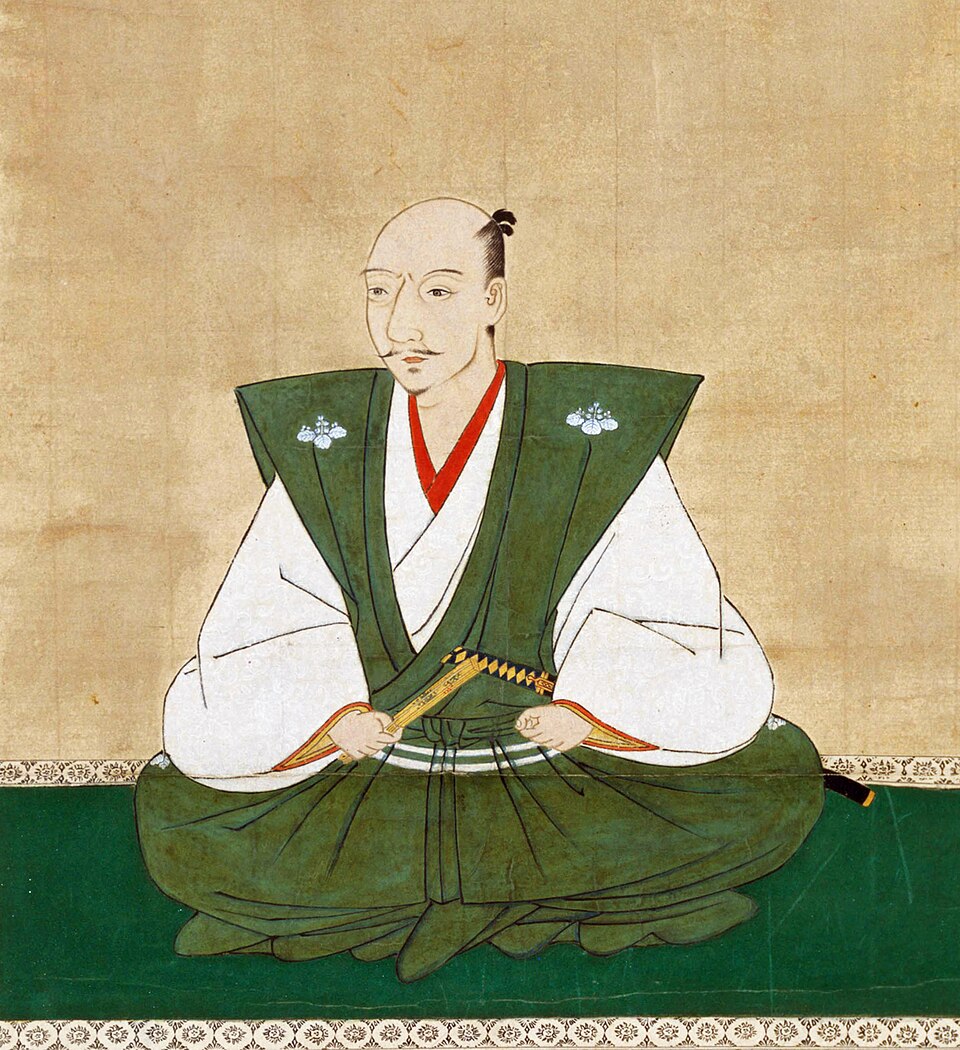
In 1571, he destroyed Enryaku-ji, the great Tendai monastery on Mount Hiei, killing thousands and effectively breaking the power of the sōhei.
He spent years fighting the Ikkō-ikki, especially in strongholds like Nagashima (destroyed in the 1570s) and Ishiyama Hongan-ji (finally subdued in 1580).
Nobunaga saw these religious forces as major military rivals, not just spiritual groups.
Hideyoshi, Nobunaga’s successor, mopped up the remaining resistance and imposed tighter control. He continued suppressing lingering Ikkō-ikki groups. He disarmed religious institutions and the general population through his sword hunt. He brought Buddhist institutions more firmly under state authority.
Tokugawa Ieyasu didn’t fight major wars against the sōhei and Ikkō-ikki as they had already been neutralised.
Instead, he created a system of strict state control over Buddhism
Under the Tokugawa shogunate, temples were integrated into government administration and Buddhism became more a regulated institution than an independent power.
So, we can see that Nobunaga destroyed and defeated militant Buddhists, Hideyoshi consolidated control and eliminated remnants and Ieyasu regulated Buddhism.
Buddhist violence died down during the Tokugawa era. The Tokugawa period was one in which the country had, by and large, been pacified and the central state was cementing its power over many realms of life.
The central state would not tolerate other centers of power. It would not tolerate rebellious provinces nor independent armies. Control was strongly exerted.
Japan’s sōhei warrior monks and Ikkō-ikki rebellions showed that some Buddhists believed that violence could be justified in certain circumstances.
Beliefs are malleable and religions can evolve in different ways.
I suspect that the lack of the strong Vinaya tradition in Japan makes it more likely that the principle of non-violence may be broken from time to time.


Leave a Reply