The relationship between Australia and Japan has undergone a striking transformation. Throughout World War II, the two nations were bitter enemies. Australian prisoners of war suffered terribly under Japanese captivity and many Australians remembered the bombing of Darwin and the threat of Japanese expansion.
Yet by the twenty-first century, Australia and Japan had become close economic partners and, increasingly, important defence partners. Their journey from wartime hostility to deep cooperation reflects changing geopolitics, economic pragmatism, reconciliation and shared democratic values.
When the war ended in 1945, anti-Japanese sentiment in Australia was intense. Australian soldiers had fought against Japan in places such as New Guinea, Malaya and Singapore. Many had died or endured harsh imprisonment. Japan’s wartime actions left a legacy of bitterness that could not disappear quickly. Australia took part in the postwar occupation settlement and initially supported strict controls to prevent Japanese rearmament. At this stage, friendship between the two countries seemed unlikely.
However, the onset of the Cold War altered regional priorities. As communist power expanded in Asia, particularly after the Chinese Revolution of 1949 and the Korean War, the United States encouraged Japan’s economic recovery and integration into the Western alliance system. Australia, closely aligned with the United States, gradually adjusted its own stance. Instead of seeing Japan only as a former enemy, Australian policymakers began to view a stable and prosperous Japan as important to regional security.
A major milestone came with the 1957 Agreement on Commerce between Australia and Japan, signed by Australian Prime Minister Robert Menzies and Japanese Prime Minister Nobusuke Kishi. This agreement normalised trade relations and laid the foundation for an economic partnership that would become central to both countries. Japan’s rapidly industrialising economy needed raw materials such as coal and iron ore. Australia had abundant natural resources and sought export markets. Economic complementarity helped overcome lingering wartime resentment.
During the 1960s and 1970s, trade expanded dramatically. Japan became one of Australia’s largest export destinations. Japan purchased minerals and energy that powered its economic growth. Revenues from these commodities contributed to Australia’s national wealth. Australians bought Japanese manufactured goods, especially cars and electronics. Brands such as Toyota, Nissan, and Sony became household names in Australia. Economic ties created familiarity and helped to reshape public attitudes.
Diplomatic relations also deepened. In 1976 the two countries signed the Basic Treaty of Friendship and Cooperation between Australia and Japan, signalling that the relationship had moved beyond trade into a broader partnership. Political leaders increasingly met with one another. Educational exchanges, tourism and migration also grew. Japanese language study expanded in Australian schools. Many Australians visited Japan and encountered a modern society very different from wartime stereotypes.
By the late twentieth century, both countries were strong U.S. allies and well-established democratic states. This strategic convergence became more important after the end of the Cold War. New regional challenges, including instability on the Korean Peninsula, maritime security concerns, and later the rise of China as a major power, encouraged closer Australia-Japan cooperation.
Japan’s postwar constitution limited military activity, but Japan’s Self-Defense Forces increasingly took part in peacekeeping and humanitarian missions. Both countries contributed to reconstruction efforts in Iraq after 2003, marking unprecedented operational cooperation.
The relationship accelerated further in the twenty-first century. In 2007, Australia and Japan signed the Japan-Australia Joint Declaration on Security Cooperation, often described as a landmark strategic agreement. It established regular defence consultations and cooperation in areas such as intelligence, counter-terrorism, border security and military exercises.
Defence ties developed steadily – especially in the 2010s. In 2013, there was the Defence Acquisition and Cross Servicing Agreement and the Information Sharing Agreement. The following year the Agreement Concerning the Transfer of Defence Equipment and Technology was signed. In 2022, the Australia-Japan Critical Minerals Partnership was concluded.
The two countries conduct joint exercises, alongside the United States and other partners. They work together through frameworks such as the Quadrilateral Security Dialogue, commonly called the Quad.
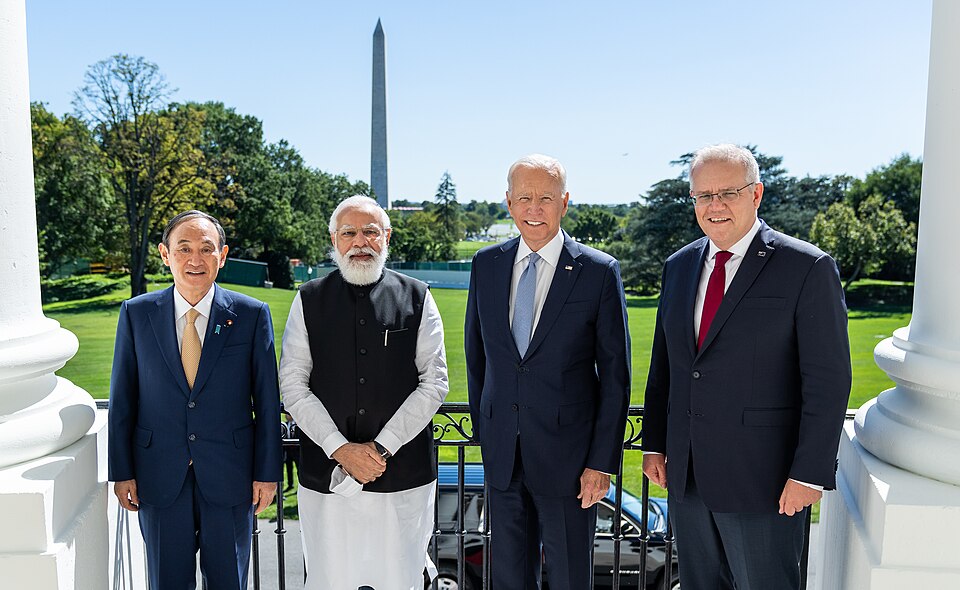
In 2022 Australia and Japan signed a Reciprocal Access Agreement that makes it easier for each country’s forces to train and operate in the other’s territory. This would have been almost unimaginable in 1945.
Several factors explain this remarkable transformation. Both nations have democratic political systems and market economies. Economic interdependence created trust and long-term incentives for cooperation. Common alliance links with the United States helped bridge former hostility. Finally, changing regional security conditions encouraged strategic alignment.
The memory of war has not entirely vanished. Historical remembrance, including the suffering of prisoners of war and civilian losses, still forms part of the relationship. However, these memories have largely been integrated into a wider partnership.
Japan remains a major customer for Australian energy and resources, while Australia values Japanese investment, technology and strategic cooperation. Their relationship demonstrates that former enemies can move to a more positive footing when their interests align. The Australia-Japan relationship has undergone a profound transformation, barely recognisable from the one that existed in 1945.


Leave a Reply