Banjo Paterson’s The Man from Snowy River is celebrated for its vivid portrayal of Australian bush life.
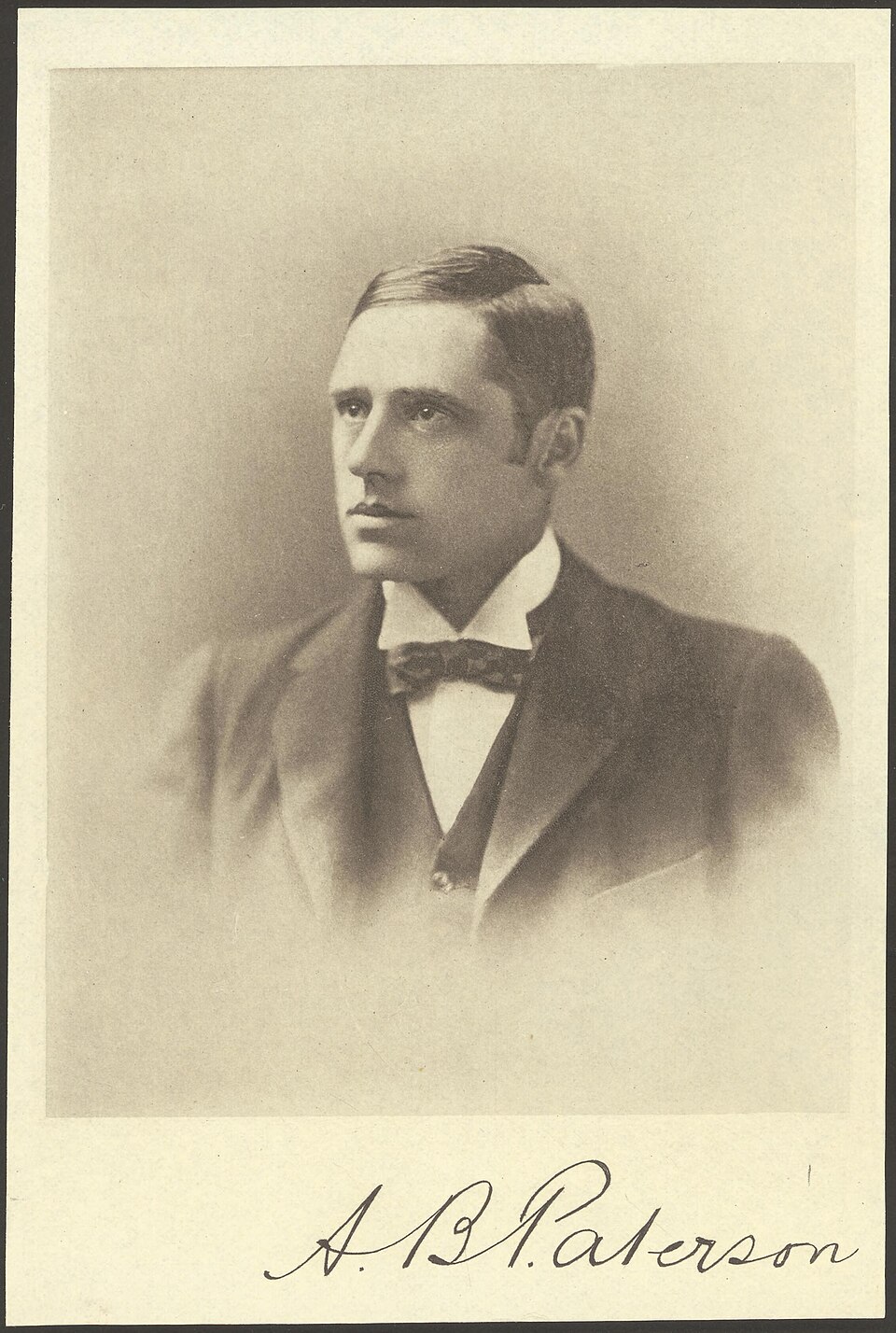
Paterson’s style combines the Australian bush vernacular and some unusual grammatical structures.
One of Paterson’s most striking stylistic habits is his use of fronted adverbial phrases. Instead of following standard prose word order, he often places directional phrases at the beginning of clauses. An example includes, “Upward, ever upward, the wild horses held their way”.
In ordinary prose this clause might read, “The wild horses held their way upward”.
By moving the adverbial phrase to the front, Paterson heightens dramatic momentum.
A second unusual feature is his grammatical inversion of negative expressions. One example reads, “For never yet was rider that could keep the mob in sight.”
In standard English this might be, “There had never yet been a rider who could keep the mob in sight.”
Paterson’s inverted syntax gives the language a more poetic quality.
Paterson’s style also relies heavily on compressed action phrases. The poem is packed with rapid movement and Paterson often condenses simultaneous actions into compact grammatical units.
He describes the bushmen racing, charging and pursuing. These constructions allow multiple actions to unfold almost at once. This adds to the energy of the poem. Rather than presenting events in separate sentences, Paterson compresses them into shorter sequences. This grammatical compression mirrors the speed of the horse chase itself.
Alongside these unusual grammar features, Paterson’s diction reveals the influence of Australian bush vernacular. Expressions such as “bushmen,” “stockwhip,” and “scrub” draw upon Australian rural speech. These contribute to the poem’s distinctive voice, situating it firmly within Australian pastoral culture rather than the British literary tradition.
Overall, Banjo Paterson’s style in The Man from Snowy River depends on much more than colourful vocabulary. His characteristic grammar – including fronted adverbial phrases, inversion and extended clause chains helps create a powerful sense of movement.


Leave a Reply