Recently I’ve been delving deeper into the lives of some of the former MPs for Gippsland South.
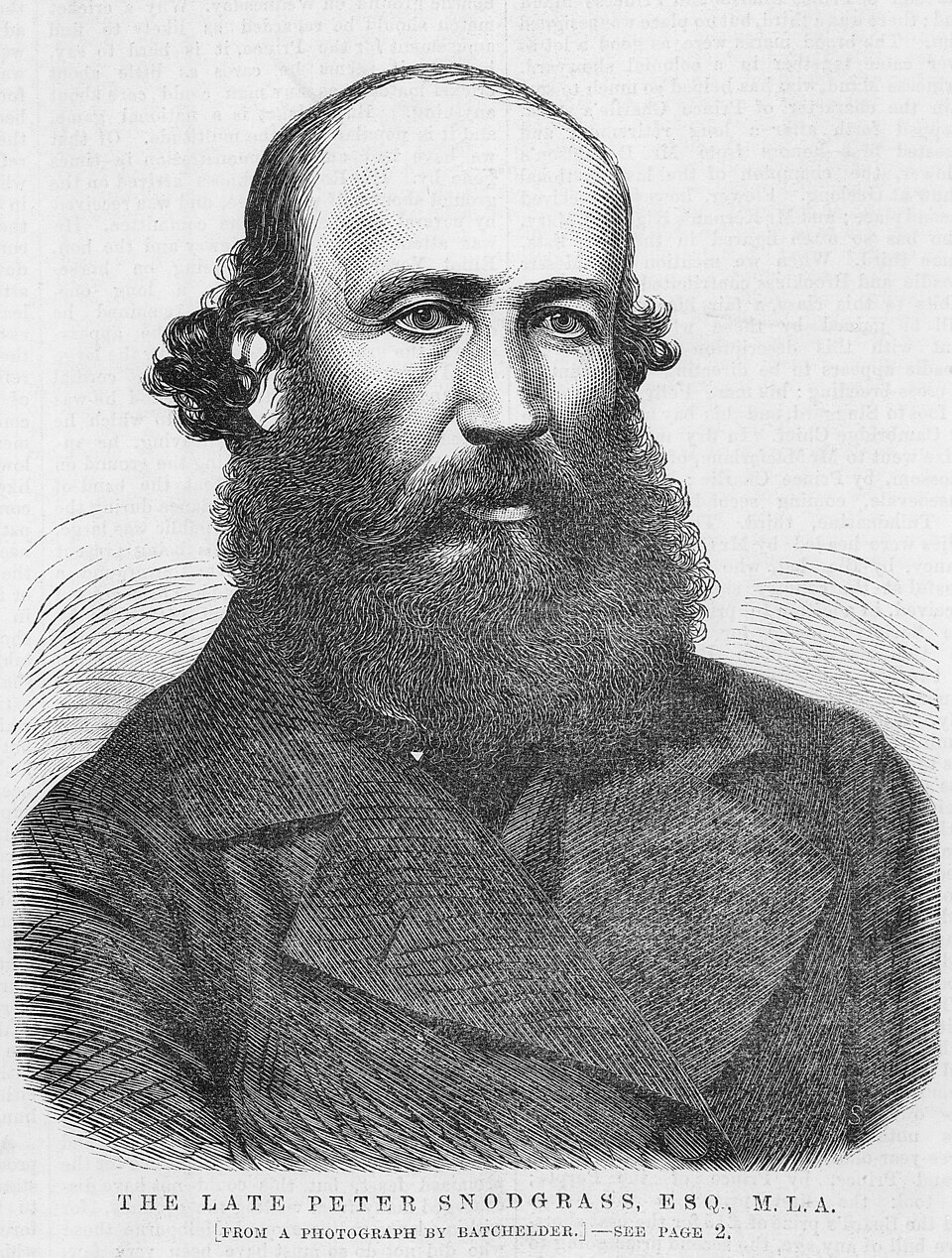
One of the more interesting characters is Peter Snodgrass.
A couple of incidents mark him out from the pack.
One was Snodgrass’ fondness for duelling.
The duel took place in Melbourne on New Year’s Eve, 1840. People had been celebrating at the Melbourne Club. Things were said, tempers flared and things soon got out of hand. A duel was proposed. One combatant was a Mr Ryrie; the other was our very own Mr Snodgrass.
Someone raced off on horseback to Heidelberg looking for pistols.
Ammunition was sourced from the military.
They needed a surgeon on hand. The services of a certain Dr. Thomas were sought out.
The event took place on Batman’s Hill.
Here is a description from a 1953 newspaper article, “distances were measured, the pistols loaded, surgical instruments laid out. The word to “fire” was about to be given when the excitable Mr. Snodgrass touched the hair trigger of his pistol and shot himself in the toe! Mr. Ryrie, being a perfect gentlemen, immediately fired in the air.”1
The story of the duel was being recounted more than 100 years after the fact.
How do we explain the story’s longevity?
Partly we can put it down to the unusual nature of the event.
Second, the protagonists ran in the colony’s highest social circles and were connected to one its most storied social clubs. The participants probably cemented the tale through its telling and retelling.
The second interesting event involving Snodgrass was his role in tracking down bushrangers in 1842.
A 1882 version of the story was published in The Herald.
Charles La Trobe, the Superintendent of the Port Phillip District, is mentioned. He is said to have supplied the horses and arms.
Interestingly, in the article the volunteers are described as “squatters”.
5 volunteered for the expedition. These were Henry Fowler, Peter Snodgrass, Robert Chamberlain, Oliver Gourlay and James Thompson.
They were sworn in as special constables and Fowler was put in charge.
They went of in the direction of Heidelberg, then onward to Diamond Creek before finally arriving in “Plenty country”.
It was reported that 9 homesteads in the area had been robbed in a single day.2
The bushrangers were having breakfast when the possy of volunteers arrived.
Fowler and his men planned to rush the bushrangers in the middle of their meal.
In the confusion one of the bushrangers (Williams) got separated from his men.
Snodgrass shot him in the head. But instead of dying right then and there, Williams proceeded to stand up and continue fighting. He was finally felled by Chamberlain.
Fowler was shot.
Snodgrass had numerous close shaves, having been shot “3 or 4 times through the clothes.”
It was reported that Gourley was also struck multiple times.
Snodgrass survived the adventure and had another 25 years to recount the tale. The story of Snodgrass and the other members passed into club folklore. He died in 1867.
Another account was published in The Age in 1946.
It is said that the volunteers were, “high-spirited young squatters, full of fight and bursting with desire to make the most of this sporting event, as they regarded the adventure.”
When the altercation with the bushrangers settled into an uneasy stalemate, John Ewart became a go-between and there was an effort at negotiations.
It is written that the bushrangers, “immediately put a meal of roast duck, red herrings and brandy from the station pantry before him.” We need to question this part of the tale. Would a band of criminals really put on such a spread when Snodgrass and co had just rushed them in an attempt to end their days on this mortal coil?
According to this article, the bushrangers agreed to surrender on the condition that the pursuers give a written undertaking that they should be treated mercifully at trial.
The trial took place on 11 May 1842 with judge Willis presiding.
It didn’t go the way the defendants had planned. The support for leniency doesn’t seem to have eventuated. They were pronounced guilty and given death sentences.
The article states, “The interval between the conviction and execution of the bushrangers was marked by an outburst of hero worship unparalleled in early Melbourne history.”
These would be public executions. It is said that the sentenced men were driven to the gallows sitting in their own coffins and that thousands attended the spectacle.3
Life in Port Phillip District in the 1840s was far wilder than today. There were bushrangers and volunteer possies.
Snodgrass comes across as a some kind of adrenaline junkie.
This rabble-rouser could cross with relative ease into the upper echelons of colonial society. In the space of a few hours, he transformed from a regular citizen to a deputised agent of the law, armed and ready to pounce on a group of alleged outlaws.
The bushranger episode in particular shows how undeveloped policing institutions were in Port Phillip District at the time.


Leave a Reply